Five Adaptogen Pairings for Five Different Kinds of Stress
Quick Answer: Match the adaptogen to the type of stress — rhodiola for mental fog, ashwagandha for wound-up anxiety, holy basil for the kind of stress that keeps you up at night.
Not all stressful days need the same fix. Here are five real-world looks for five different kinds of hard days.

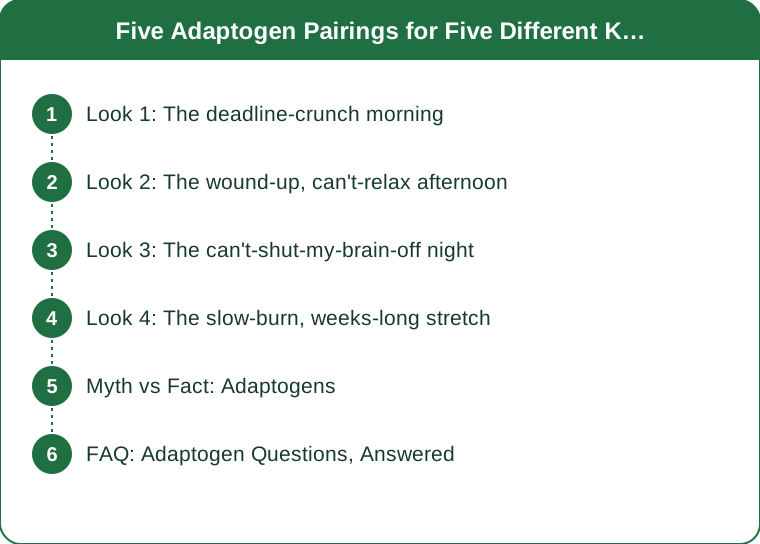
Look 1: The deadline-crunch morning
Rhodiola rosea, taken with breakfast, is the go-to here because it’s associated with reduced mental fatigue rather than sedation — you want alert, not calm-and-sleepy, before a deadline.
Pair it with a normal caffeine dose rather than skipping coffee; rhodiola doesn’t replace caffeine, it works alongside it for sustained focus.
Look 2: The wound-up, can’t-relax afternoon
Ashwagandha root extract in the early afternoon is the classic pairing for the kind of stress that shows up as a tight chest or short temper.
Most studied doses sit around 300-600mg of a standardized root extract — check the label, since raw powder doses vary widely.
Look 3: The can’t-shut-my-brain-off night
Holy basil (tulsi) as an evening tea is gentler than a supplement capsule and pairs naturally with a wind-down routine — the ritual of making tea does real work here too.
Avoid stacking it with sedating sleep aids without checking interactions first; more isn’t automatically better.

Look 4: The slow-burn, weeks-long stretch
For stress that’s less a single bad day and more a bad month, cycling matters more than any single herb — see the pairing mistakes section below for why constant daily use can blunt effectiveness over time.
Eleuthero (Siberian ginseng) is often used here for its association with stamina during extended stress rather than acute calm.
Myth vs Fact: Adaptogens
Myth: more adaptogens stacked together work better. Fact: stacking multiple adaptogens without knowing how each affects you individually makes it hard to tell what’s actually helping — start with one at a time.
Myth: adaptogens work like a sedative, immediately. Fact: most research points to cumulative effects over 2-4 weeks of consistent use, not single-dose relief.
FAQ: Adaptogen Questions, Answered
Can I take adaptogens every single day long-term?
Most sources recommend cycling — a common pattern is 6-8 weeks on, then a 1-2 week break — rather than continuous year-round use.
Do adaptogens interact with medication?
Some can, particularly with thyroid medication or blood thinners. Check with a pharmacist or doctor before starting, especially with ashwagandha.
Is tea or capsule form better?
Capsules give a more consistent dose; tea is gentler and pairs with a calming ritual. Neither is objectively better — it depends on which stress pattern you’re targeting.
TL;DR:
- Match the adaptogen to your stress type, not just ‘stress’ in general
- Rhodiola for morning focus, ashwagandha for tension, holy basil for sleep, eleuthero for long stretches
- Cycle usage 6-8 weeks on, 1-2 off rather than taking the same one indefinitely
This is general information, not medical advice — check with a professional if you’re on other medications.
Keep Reading
This article is for general informational purposes only and is not medical advice. Always consult a qualified health professional for guidance specific to you.