5 Adaptogen Rituals for the Week the Light Starts Changing
Quick Answer: By mid-to-late August, daylight in the northern US is already shrinking by two to three minutes a day, and that shift moves melatonin timing earlier while most people’s schedules do not move at all. The result is a familiar late-summer combination: tired earlier in the evening, groggier in the morning, and less resilient to ordinary stress. These five rituals adjust timing more than dosage - morning light with your coffee, moving ashwagandha later, protecting the afternoon, adding a warm ritual, and a Sunday reset.
Nothing dramatic has happened. You are sleeping the same hours, eating the same food, and yet the last week of August feels heavier than the first. The light changed, your internal clock noticed, and your routine did not.

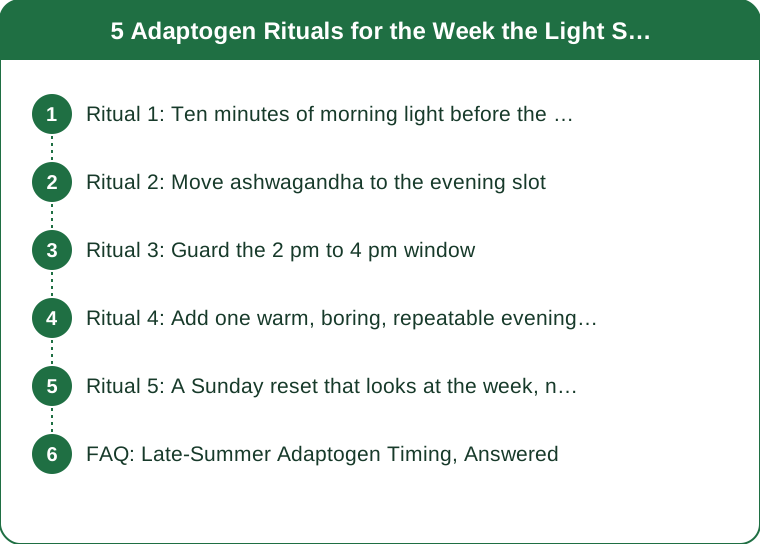
Ritual 1: Ten minutes of morning light before the mug
The single highest-leverage change of the season, and it costs nothing. Outdoor morning light is the primary signal that anchors your circadian clock, and as sunrise drifts later through August, the natural dose you were getting in June quietly shrinks. Ten to fifteen minutes outside within an hour of waking - on a step, a balcony, walking to the car - re-anchors the timing that everything else in your day depends on.
Pair it with the drink rather than replacing it. Take your coffee, tea, or morning adaptogen blend outside instead of to the desk. Habit stacking onto something you already do reliably is why this one sticks when a standalone light habit does not.
Cloudy days still work. Overcast outdoor light is dramatically brighter than indoor lighting - typically by an order of magnitude or more - so the rule is outdoors, not sunny. Through a window is considerably weaker than actually stepping outside.
What it does for the rest of the stack. Adaptogens are generally described in terms of stress response rather than sedation, and their effects tend to be modest and cumulative. Circadian timing, by contrast, is a large lever. Getting light right first means everything else you take is working with your physiology rather than trying to compensate for it.
Give it a week before judging. Circadian adjustments are not same-day effects. Most people notice easier evening wind-down within four to seven days, and easier mornings shortly after.
Ritual 2: Move ashwagandha to the evening slot
If you have been taking it in the morning, late August is the moment to try the switch. Ashwagandha is the most commonly used adaptogen for stress support, and many people find it sits better in the evening - particularly as the season shifts and the problem changes from needing daytime alertness to needing an easier wind-down.
Take it with food that contains some fat. Withanolides, the compounds most associated with ashwagandha, are fat soluble, and taking the supplement with a meal or a warm drink containing milk or a milk alternative is the traditional pairing for a reason. On an empty stomach, some people get mild digestive upset.
Keep the dose consistent rather than escalating it. Adaptogen effects are typically described as building over weeks, not doses. Doubling because week one felt like nothing is the most common misstep in this category, and it is also how side effects show up.
Set a fixed clock time, not a fixed event. Anchoring to dinner is unreliable in late summer, when dinner can happen at 6 or at 9. A fixed time - say, 8:30 pm - gives the routine the same steadiness the season is taking away.
A caveat worth stating plainly. Ashwagandha is not appropriate for everyone, including people who are pregnant or breastfeeding, people with thyroid conditions, and people on certain medications including sedatives and immunosuppressants. This is general information, not medical advice - check with a clinician who knows your history before starting or changing a supplement.
Ritual 3: Guard the 2 pm to 4 pm window
The late-summer afternoon dip hits harder than the summer one. As evening melatonin creeps earlier, the natural mid-afternoon circadian trough often deepens, and the standard response - a 3 pm coffee - lands squarely in the window where caffeine is most likely to interfere with the sleep you now need more of.
Set a caffeine cutoff based on your bedtime, not the clock. Caffeine has a half life commonly cited around five to six hours, with wide individual variation, meaning a meaningful fraction of a 3 pm dose is still circulating at 9 pm. Working backward eight hours from your target bedtime is a practical default.
Replace the cup with a movement break first. Ten minutes of walking outside does double duty here: it addresses the alertness dip and delivers a second, smaller dose of daylight, which is exactly what the season is short of.
If you want something in a mug, go warm and caffeine-free. Tulsi, chamomile, rooibos, or a mushroom blend without added caffeine all give the ritual without the sleep cost. The ritual matters more than most people expect - a lot of the 3 pm coffee is a break, not a stimulant.
Watch for the false read. Feeling flat at 3 pm in late August is usually circadian, not a sign the adaptogens stopped working. Changing supplements to solve a timing problem is a reliable way to spend money and learn nothing.

Ritual 4: Add one warm, boring, repeatable evening cue
A wind-down ritual works because it is a signal, not because of what is in the cup. As the light changes, the evening needs an explicit transition that summer did not - in July the fading light did the job for you at 9 pm, and by September it is doing it at 7:30 whether your schedule agrees or not.
Keep the recipe stupidly simple. Warm milk or oat milk, a half teaspoon of your evening blend, a little cinnamon or cardamom, honey if you like it. Complexity is the enemy of a ritual that has to survive a tired Tuesday.
Dim the room while you make it. Bright overhead light in the last hour before bed works directly against the melatonin timing you spent your morning light anchoring. One lamp instead of the ceiling is a smaller change than it sounds and a bigger effect than it sounds.
Same mug, same chair, same time. The cue is the repetition. A ritual performed at wildly different times each night is just a beverage.
And let it be the phone boundary. For most people, pairing the drink with putting the phone on the charger across the room is the part that actually changes sleep quality. The adaptogen is the excuse; the boundary is the mechanism.
Ritual 5: A Sunday reset that looks at the week, not the day
Fifteen minutes, once a week, prevents most of the drift. Late August is when routines built for long evenings quietly stop matching the calendar, and the reset is where you notice that before October does it for you.
Check three numbers, not ten. Roughly what time did you fall asleep, roughly what time did you wake, and how many mornings did you get outside within an hour of waking. That is enough to see the pattern, and few enough that you will actually do it.
Refill and pre-portion. Put the week’s evening doses somewhere visible next to the kettle. Adherence in this category fails on logistics far more often than on belief.
Adjust one thing per week, maximum. If you change light timing, dose timing, and caffeine cutoff simultaneously and feel better, you have learned nothing you can repeat. One variable per week takes a month and teaches you your own pattern.
Plan the seasonal handoff now. The first genuinely dark evening in September is much easier when the ritual already exists. Building it during the pleasant part of the transition is why this is a late-August article and not an October one.
Keep expectations calibrated. Adaptogens are supportive, and the published evidence is generally modest and mixed. Sleep timing, daylight, movement, and consistency do more heavy lifting than anything in the cupboard. This is general information, not medical advice.
FAQ: Late-Summer Adaptogen Timing, Answered
Should I take adaptogens in the morning or evening?
It depends on the herb and your goal. Rhodiola is more commonly used in the morning for daytime energy, while ashwagandha suits many people better in the evening, especially when the goal is easier wind-down. Keep the timing fixed for at least two weeks before judging it.
Why do I feel more tired in late August than in July?
Daylight is shrinking by a couple of minutes a day by then, which shifts melatonin timing earlier while your schedule stays put. Morning outdoor light and a consistent wind-down usually address it faster than any supplement change.
How long do adaptogens take to work?
Most traditional use and research protocols run on the order of weeks rather than days, and effects tend to be subtle rather than dramatic. If nothing has changed after four to six weeks of consistent use at a sensible dose, escalating the dose is usually the wrong next step.
Can I take ashwagandha with my afternoon coffee?
Many people do, but if sleep is the thing you are trying to protect this season, the coffee timing deserves more scrutiny than the pairing. Work back roughly eight hours from bedtime for your caffeine cutoff, and check with a clinician about interactions if you take any medication.
TL;DR:
- Late-August fatigue is usually a light-timing problem, not a supplement problem - daylight is already shrinking measurably by mid-month.
- Ten to fifteen minutes of outdoor light within an hour of waking is the highest-leverage ritual of the season; stack it onto your morning drink.
- Consider moving ashwagandha to a fixed evening slot with some fat, and hold the dose steady rather than escalating.
- Protect the 2 to 4 pm window with a walk and a caffeine cutoff roughly eight hours before bed instead of a third coffee.
- Build one warm, repeatable evening cue now and run a 15-minute Sunday check on sleep times and light exposure, changing one variable per week.
The season is going to keep shifting whether or not you adjust. Five small timing changes made in the pleasant part of the transition are what stop the dark part of it from arriving as a surprise. This is general information, not medical advice - talk to a clinician before starting or changing any supplement.
Keep Reading
This article is for general informational purposes only and is not medical advice. Always consult a qualified health professional for guidance specific to you.