The 3 PM Crash Week: 5 Adaptogen Moments That Fit a Real Schedule
Quick Answer: Adaptogens work best when matched to a moment rather than taken as a single daily habit. Broadly: rhodiola and eleuthero suit the morning and pre-crash window because they are more stimulating, ashwagandha and reishi suit the evening because they are more calming, and holy basil sits comfortably anywhere. Timing matters more than dose for most people. None of them replace sleep, food, or a walk - they work at the margins, and the margin is where the 3 pm hour usually lives.
September weeks have a particular shape. The mornings get busy again, the afternoons sag, and by four you are reaching for a third coffee that will still be with you at eleven. Here are five moments worth treating deliberately.

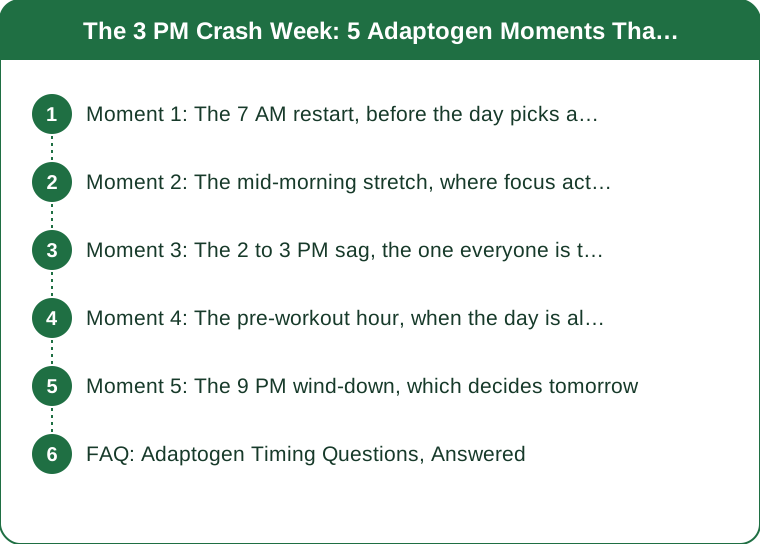
Moment 1: The 7 AM restart, before the day picks a direction
What is happening: Cortisol peaks naturally within 30 to 45 minutes of waking - the cortisol awakening response. That peak is useful. The mistake is stacking a large caffeine dose directly on top of it, which is part of why the crash arrives so reliably six hours later.
What fits here: Rhodiola rosea is the most studied option for this slot. Trials in fatigued students and shift workers have used 200 to 400 mg daily of an extract standardized to around 3 percent rosavins and 1 percent salidroside, generally taken in the morning on an empty stomach, with reported improvements in perceived fatigue and mental performance under strain.
How to build the moment: Water first, then the rhodiola, then wait 20 to 30 minutes before coffee. That single delay is the highest-value change in this whole list and it costs nothing. The point is not to remove caffeine but to stop it landing on an already-peaking cortisol curve.
Why not ashwagandha here: It is not sedating for most people, but its profile is better suited to lowering evening arousal than to sharpening a morning. Save it - it has a better slot later.
One caution: Rhodiola is stimulating enough that some people find it disrupts sleep if taken after early afternoon. If you are sensitive, keep it strictly before noon.
Moment 2: The mid-morning stretch, where focus actually gets spent
What is happening: Between roughly 9 and 11 is where most people do their hardest cognitive work, and it is also where the first small dip shows up if breakfast was thin or last night was short.
What fits here: Holy basil, also called tulsi, is the most flexible option on this list. It is traditionally taken as a tea, typically 300 to 600 mg of extract or one to two cups of infusion, and small human trials have looked at it for perceived stress and general wellbeing. It is neither stimulating nor sedating enough to disrupt a working morning.
How to build the moment: Make it the tea you drink instead of the second coffee, not in addition to it. The behavioral swap is doing at least as much work as the herb: you get a warm drink, a two-minute pause, and no additional caffeine landing at the wrong hour.
A realistic expectation: If you are under-slept, no adaptogen will substitute for the sleep. What this moment does is stop you from borrowing energy from your afternoon to pay for your morning.
Pair it with something physical. Standing up and walking for three minutes at the same time turns a supplement habit into a circulation and attention reset, and it is the part people notice most.
Moment 3: The 2 to 3 PM sag, the one everyone is trying to solve
What is happening: The post-lunch dip is a genuine circadian phenomenon, not just a food coma - core body temperature and alertness dip in the early afternoon regardless of whether you ate. A large, carbohydrate-heavy lunch amplifies it; it does not create it.
What fits here: This is where most people get the timing wrong. Reaching for a stimulant at 3 pm means it is still active at 9 pm, because caffeine has a half-life of roughly five to six hours. Eleuthero, sometimes called Siberian ginseng, has been used in this window for perceived endurance and fatigue, typically at 300 to 400 mg. A second small dose of morning rhodiola is the other reasonable option, provided you are not sleep-sensitive.
How to build the moment: Protein and a short walk first, supplement second. Ten minutes outdoors in daylight does more for the 3 pm sag than anything you can swallow - daylight exposure is one of the strongest available inputs to alertness and to that night’s sleep timing.
What to avoid: Ashwagandha at this hour if you need to be sharp. It is the right herb at the wrong time.
And notice the diagnostic value. If the 3 pm crash is severe every single day, that is usually information about sleep duration, breakfast protein, or an over-caffeinated morning - not a gap that a capsule is meant to fill.

Moment 4: The pre-workout hour, when the day is already spent
What is happening: Evening training after a full workday is a motivation problem more than a physical one. The muscles are fine. The perceived effort is what has gone up.
What fits here: Rhodiola has the most relevant evidence, with small trials suggesting reduced perception of effort during exercise. If you train in the early evening and are sensitive to sleep disruption, this is the point to test it carefully - or to skip it entirely and rely on the workout itself.
How to build the moment: Take it 30 to 45 minutes before, with a small carbohydrate and protein snack. Trying to add an adaptogen on an empty stomach after a long day tends to produce a queasy warm-up and nothing else.
A note on cordyceps: It appears in a lot of pre-workout marketing on the strength of oxygen-uptake claims. Human results are mixed and mostly modest, with more supportive findings in older adults and at longer supplementation periods. It is a reasonable thing to try and a poor thing to expect much from.
The honest hierarchy for evening training: a snack, daylight earlier in the day, and a fixed start time will each beat any supplement here. The herb is the last five percent, not the foundation.
Moment 5: The 9 PM wind-down, which decides tomorrow
What is happening: This is the moment with the most leverage and the least attention. Tomorrow’s 3 pm crash is largely built tonight.
What fits here: Ashwagandha has the strongest human evidence base of the common adaptogens for stress and sleep quality. Trials have commonly used 300 to 600 mg daily of a root extract over 8 to 12 weeks, with reported reductions in perceived stress scores and, in several studies, improved sleep onset and quality. Reishi is the traditional alternative for people who prefer a mushroom, usually as a tea.
How to build the moment: Take it with the last food of the evening, then dim the lights. The supplement is a cue as much as an intervention - it marks the boundary between the working day and the night, and that boundary is what most busy Septembers have lost.
Set the expectation correctly: Ashwagandha trials generally run 8 to 12 weeks. This is not a same-night effect, and judging it after four days will tell you nothing.
Who should not take it: People who are pregnant or breastfeeding, people with thyroid conditions, people on sedatives or immunosuppressants, and anyone with liver concerns should not start ashwagandha without medical advice - rare cases of liver injury have been reported. Rhodiola and eleuthero can interact with stimulants and blood pressure medication.
This is general information, not medical advice. Talk to a clinician before starting any supplement, especially if you take prescription medication or have an existing condition.
FAQ: Adaptogen Timing Questions, Answered
What time of day should I take adaptogens?
Match the herb to the moment: rhodiola and eleuthero in the morning or early afternoon because they are more activating, ashwagandha and reishi in the evening because they suit winding down, and holy basil anywhere. Taking a stimulating adaptogen late is the most common timing mistake.
Can adaptogens replace my afternoon coffee?
They can reduce how much you reach for it, but they do not deliver caffeine’s acute effect. The bigger win is the swap itself - avoiding a 3 pm stimulant that is still active at 9 pm and disrupting the sleep that caused the crash in the first place.
How long until adaptogens work?
Most of the human research runs 8 to 12 weeks, particularly for ashwagandha and stress outcomes. Some people notice changes in sleep or perceived energy within two weeks, but judging any of these after a few days is not a fair test.
Is it safe to take more than one adaptogen?
Many traditional formulas combine them, but stacking makes it impossible to know what is working and increases interaction risk. Start with one, give it a full trial period, and check with a clinician if you take prescription medication - especially thyroid, sedative, or blood pressure drugs.
TL;DR:
- Match the adaptogen to the moment: rhodiola or eleuthero before noon, holy basil mid-morning, ashwagandha or reishi at night.
- The 7 am move with the biggest payoff is delaying coffee 20 to 30 minutes past waking, not adding a supplement.
- The 3 pm sag responds better to protein, daylight, and a short walk than to anything you swallow.
- Ashwagandha trials typically run 8 to 12 weeks at 300 to 600 mg - judge it on that timeline, not on a few days.
- Check with a clinician first if you are pregnant, have thyroid or liver conditions, or take sedatives, stimulants, or blood pressure medication.
The herbs work at the margins. The moments are what make the margins add up - and in a September week, the 9 pm boundary is worth more than the 3 pm rescue.
Keep Reading
This article is for general informational purposes only and is not medical advice. Always consult a qualified health professional for guidance specific to you.