5 Travel-Week Adaptogen Setups That Survive a Suitcase
Quick Answer: The setups that survive travel are pre-portioned and need nothing but water: single-dose sachets or a weekly pill organiser for powders, capsules for the evening dose, a cold-brew tea bag for the morning, and one collapsible cup. Pack for the trip you will actually have - jet-lagged, without a kettle - and expect to keep one ritual rather than five.
Every routine survives at home and dies in transit. A travel week is where six weeks of consistency quietly resets to zero, usually on day two, because the powder tub did not come and the hotel had no spoon.
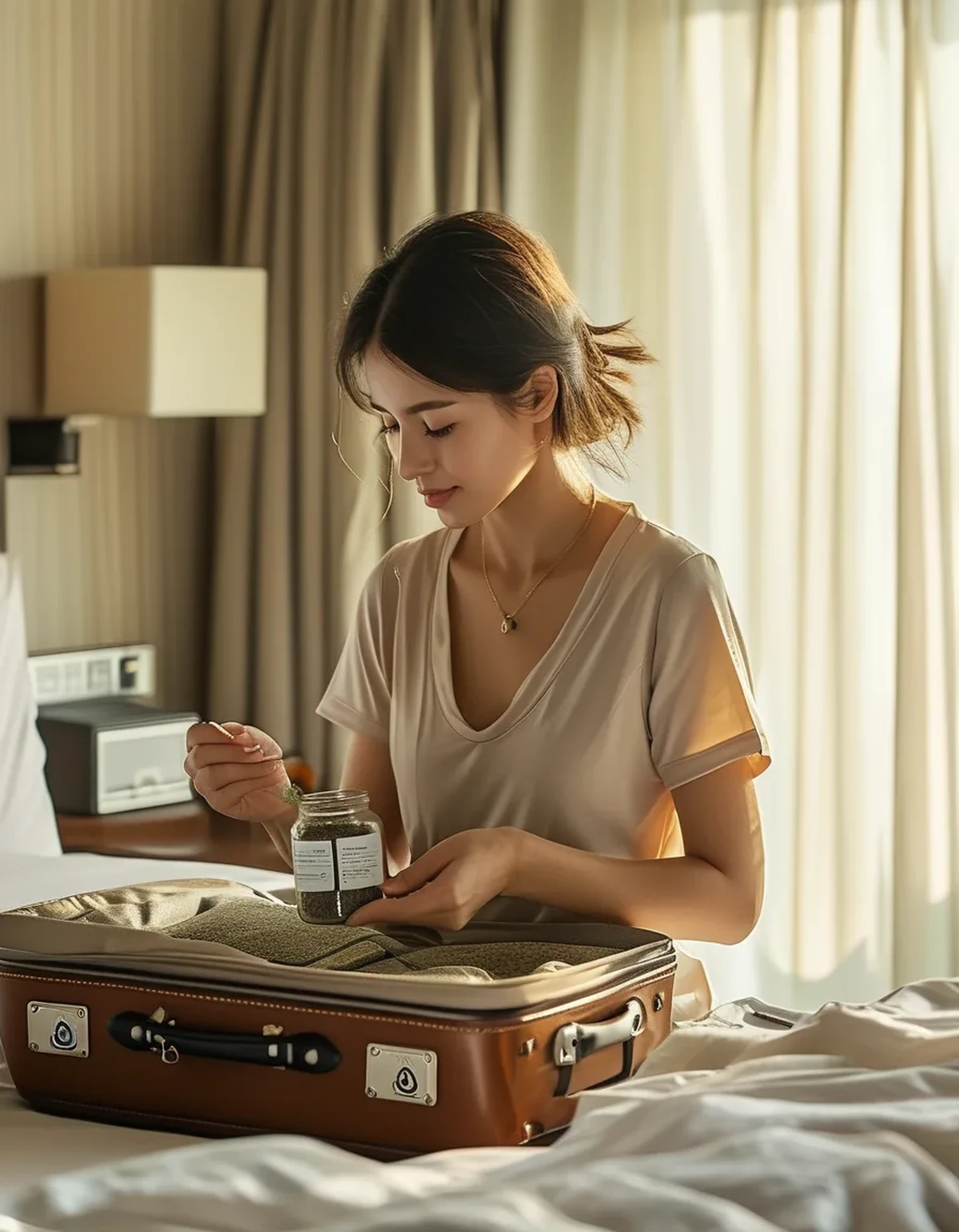
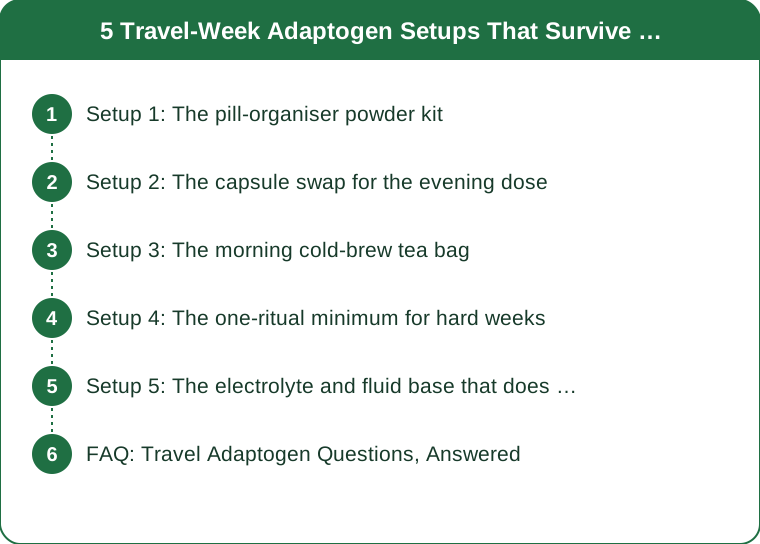
Setup 1: The pill-organiser powder kit
A seven-day pill organiser is the cheapest travel solution for powdered adaptogens and it solves three problems at once.
How to build it: portion each day’s powder into one compartment before you leave - half a teaspoon of ashwagandha or 1 teaspoon of reishi, whatever your normal amount is. Snap the lid, put the whole thing in a zip bag as a leak guard, and it goes in hand luggage without issue.
Why it beats bringing the tub: no scoop to lose, no powder cloud in your case, and the volume drops to something that fits in a wash bag. It also removes the daily decision, which is the part that actually fails when you are tired.
Mixing without a kitchen: powders clump badly in cold water. Add a splash of hot water from a tap or a coffee machine first, stir with the handle of a hotel spoon or a clean pen, then top up with cold. If the room has no hot water at all, a shaker bottle with a wire whisk ball handles it.
The one thing to check: if you are flying, powders in a case sometimes get a second look at security. Keeping the original label from the tub in the bag makes that conversation two seconds long instead of five minutes.
Setup 2: The capsule swap for the evening dose
For the evening adaptogen - usually ashwagandha - capsules are simply the better travel format, even if you prefer powder at home.
Why: no mixing, no taste, no milk required, and no risk of a beige cloud in your suitcase. You take it with water at the same time each night, which is the variable that matters most for an evening routine.
How to match your dose: check the label rather than assuming. Common capsule strengths run 300 to 600mg, and standardised extracts are often dosed lower than raw powder because the extract is concentrated. Two capsules of a 300mg extract is not equivalent to two teaspoons of raw root powder. If you normally take powder, look at what the powder tub states per serving and pick a capsule count that lands near it.
Timing on the road: keep it 60 to 90 minutes before your intended bedtime in local time, not in the time zone you left. Anchoring to local time is one of the few things you can do that genuinely helps the adjustment.
Caveats stay the same when travelling. Ashwagandha is not suitable if you are pregnant or breastfeeding, have a thyroid condition, or take sedatives or thyroid medication. This is general information, not medical advice.
Setup 3: The morning cold-brew tea bag
The morning ritual is the easiest one to keep, because a tea bag needs no equipment at all.
What to pack: seven tulsi (holy basil) tea bags in a zip bag. They weigh nothing, they cannot leak, and no security officer has ever queried a tea bag.
How to make it without a kettle: put one bag in a bottle of room-temperature water before bed, leave it out or in the mini fridge, and drink it in the morning. Cold extraction takes longer than hot but pulls fewer tannins, so it tastes smoother - which is what makes you finish it on a hot travel morning.
Why the morning slot survives travel best: you are in a room, alone, with water available, before the day starts making decisions for you. Later slots collapse against meetings, meals, and flights.
Add the boring bit: a pinch of salt and a squeeze of lemon if you have flown. Cabin air is very dry and a long flight leaves most people mildly dehydrated for a day, which feels almost exactly like the fog people blame on missing their supplements.
Skip the airport coffee-first habit for one day if you can. Fluid before caffeine on arrival day is a small change with a noticeable payoff.
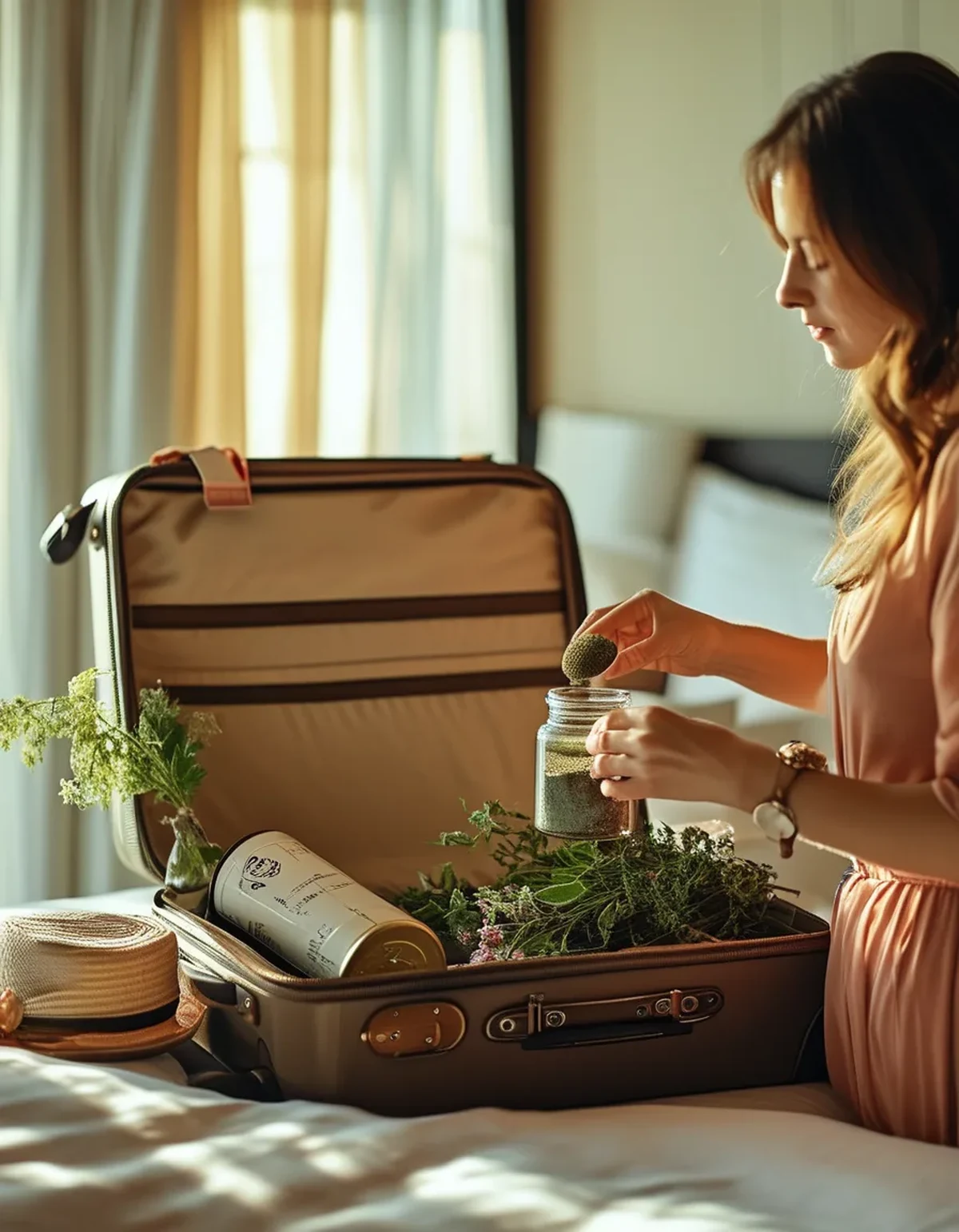
Setup 4: The one-ritual minimum for hard weeks
This is the setup for a genuinely difficult trip - back-to-back travel days, early flights, no control over meals. The goal shifts from maintaining the routine to not breaking the streak.
Pick one ritual and keep only that. For most people the evening one is the right keep, because it supports sleep in an unfamiliar room and takes fifteen seconds. If your priority is steady daytime energy, keep the morning tea instead.
Why one beats five: adaptogen research and traditional use both assume 4 to 8 weeks of consistency before judging effects. A week of one ritual keeps that clock running. A week of trying to hold five, dropping all of them by Wednesday, and restarting on your return resets it.
Make the one ritual physically unavoidable. The capsules go next to your toothbrush, not in the case. The tea bag goes in the water bottle before you sleep. Location beats intention when you are tired.
Do not add anything new on a travel week. A new adaptogen in a new time zone with new food and disrupted sleep gives you no usable information about whether it works. Start new things in a normal week.
Setup 5: The electrolyte and fluid base that does the heavy lifting
The least glamorous setup, and on a travel week probably the highest-impact one.
Why it matters more than usual: flying is dehydrating, travel days often mean less water and more coffee, and hot destinations add sweat losses. Layer any adaptogen on top of mild dehydration and it will feel like it stopped working - because the thing you are trying to fix is fluid, not stress.
What to pack: seven electrolyte sachets, which weigh almost nothing. One on each flight day and any day with heat or a sweaty session.
A simple daily floor: a large glass of water on waking, a refillable bottle you carry through the airport past security, and one electrolyte drink on travel days. That is the whole protocol.
What to expect: getting the fluid base right tends to remove the vague grey feeling that people attribute to missing their stack. Once it is in place, you can actually tell whether the herbs are doing something - which is the only way a 4 to 8 week trial ever gives you a real answer.
On your return, resume rather than restart. Pick the routine back up at full amount the next morning. There is no need to taper back in, and treating a travel gap as a failure is the thing that most often ends a run for good.
FAQ: Travel Adaptogen Questions, Answered
Can I take adaptogens in a different time zone straight away?
Yes, and anchoring to local time from the first day is usually better than sliding gradually. Evening doses to local bedtime, morning doses to local waking.
Do powders count as liquids at airport security?
No, but larger quantities of powder in hand luggage can trigger a manual check in some countries. Keep the amount modest, use a clear bag, and bring the original label if you have room.
Is it worth taking anything specifically for jet lag?
Fluid, light exposure, and local-time meals do far more than any supplement. Keeping your existing evening ritual on local time is a reasonable support; expecting an adaptogen to fix a six-hour shift is not.
What if I miss two or three days entirely?
Just resume. Adaptogen effects are cumulative rather than dose-dependent day to day, so a short gap is a pause rather than a reset. Skipping the restart because you missed a few days is the only version that actually costs you.
TL;DR:
- Pre-portion powders into a seven-day pill organiser - no tub, no scoop, no leaks
- Swap the evening dose to capsules for travel and check strengths rather than assuming equivalence
- Cold-brew a tulsi tea bag overnight in a water bottle when there is no kettle
- On hard trips keep exactly one ritual so the 4 to 8 week consistency clock keeps running
- Pack electrolyte sachets - dehydration mimics everything you think the missing stack was doing
A travel week is not the time to test a new stack or to be impressive about a routine. It is the time to protect the streak with the least possible effort, so the run you started in August is still running when the weather turns.
Keep Reading
This article is for general informational purposes only and is not medical advice. Always consult a qualified health professional for guidance specific to you.