Adaptogens and Coffee: What Mixes, What Cancels, and When to Take Each
Quick Answer: Caffeine and adaptogens do not chemically destroy each other, but they can work at cross purposes. Calming herbs like ashwagandha do their best work away from your coffee - evening is better anyway. Energizing ones like rhodiola stack with caffeine, sometimes into jitters, so cut your coffee back the day you add it. Mushroom powders like lion’s mane pair neutrally and conveniently with coffee, though most pre-mixed mushroom coffees are dosed too low to matter.
The latte has become the delivery vehicle for the entire supplement aisle. Some of those spoonfuls are well placed. Some are paying for an effect the espresso underneath is actively opposing.

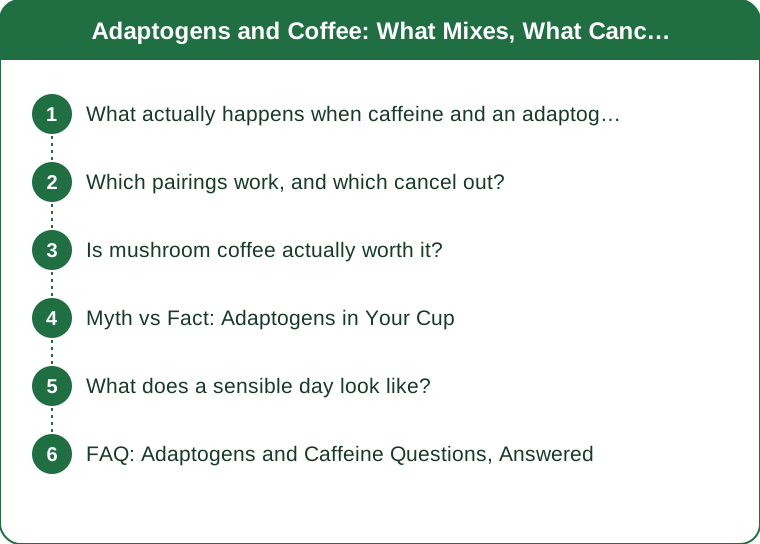
What actually happens when caffeine and an adaptogen land together?
Nothing dramatic - and that is the point people miss. There is no fizzing chemical clash. The interaction is pharmacological push and pull: caffeine is a stimulant with a 4 to 6 hour active window, and each adaptogen has its own direction of push.
Three broad outcomes:
- Aligned effects stack. Rhodiola and caffeine both increase alertness. Together the effect is bigger than either alone - useful at the right dose, jittery past it.
- Opposed effects blunt each other. Ashwagandha’s calming, cortisol-moderating direction runs against a stimulant’s. Neither is destroyed; you simply feel less of each, then conclude the herb does nothing.
- Neutral pairings coexist. Lion’s mane and most functional mushrooms have no meaningful stimulant or sedative direction, so coffee neither helps nor hurts them.
One genuine timing note: caffeine’s half-life is roughly 5 hours, longer for slow metabolizers and anyone on certain medications. An afternoon adaptogen latte is mostly an afternoon caffeine problem wearing a wellness costume - the herb is fine, the espresso under it is what wrecks the night.
If you are pregnant or breastfeeding, take thyroid, sedative, blood pressure, or diabetes medication, or have a diagnosed anxiety or heart condition, run any adaptogen plan past your doctor first. This is general information, not medical advice.
Which pairings work, and which cancel out?
Works with coffee: rhodiola. The best-studied energizer of the group, with reasonable evidence for reducing mental fatigue. It stacks with caffeine, so treat the combination as one stimulant dose - on rhodiola days, start with half your usual coffee and see what you actually need. Racing heart or restlessness means the stack is too big.
Works with coffee: lion’s mane and cordyceps. No stimulant clash, mild flavor, and the morning coffee acts as a consistency anchor - you never forget a supplement that lives next to the beans. Dose is the catch, covered below.
Wasted in coffee: ashwagandha. Not dangerous alongside caffeine, just poorly placed. Its calming direction is opposed while caffeine is active, and its best-supported use case - supporting sleep and evening wind-down - argues for taking it 8 hours away from your last cup. Morning-latte ashwagandha is the single most common well-intentioned misplacement.
Depends: tulsi (holy basil). Gently calming; most people do better with it as an afternoon caffeine replacement than a coffee companion. Swapping the 3pm cup for tulsi tea addresses the same slump the coffee was covering.
Skip stacking entirely: anything new. Introduce one herb at a time, away from variables like a caffeine change, or you will never know which lever moved.
Is mushroom coffee actually worth it?
As a category: convenient, overpriced, and usually underdosed. The details matter more than the verdict.
The dose problem. Studies on lion’s mane generally use somewhere in the range of 1 to 3 grams of extract daily. Many pre-mixed mushroom coffees contain a few hundred milligrams of mushroom powder per serving - and sometimes that powder is mycelium grown on grain, which carries a hefty share of starch rather than mushroom compounds. You are often getting a fifth of a studied dose dressed in a studied price.
The label tells you who is serious. Look for: the mushroom species in Latin, fruiting body rather than mycelium on grain, an extract ratio or beta-glucan percentage, and milligrams per serving stated plainly. Brands with good numbers print them; vagueness is an answer too.
The honest math usually favors buying a plain, well-specified mushroom extract powder and adding it to coffee you already like. Cost per effective dose drops sharply, and you control both variables independently.
Where mushroom coffee genuinely earns its keep: as a half-caffeine swap. Most blends run 40 to 60mg caffeine against coffee’s 90 to 150, so switching the second daily cup to one cuts your afternoon caffeine load in half while keeping the ritual - and for a lot of people that caffeine reduction is the effect they then credit to the mushrooms.

Myth vs Fact: Adaptogens in Your Cup
Myth: Heat destroys adaptogens, so hot coffee ruins them. Fact: Most of these herbs are traditionally prepared as teas and decoctions - simmered, not just steeped. Brief latte heat is not the weak point. Degradation over months in a humid cupboard is the more realistic loss.
Myth: Adaptogens cancel caffeine’s downsides, so you can drink more coffee. Fact: Nothing about ashwagandha or l-theanine-style smoothing changes caffeine’s half-life or its sleep cost. An adaptogen latte at 4pm keeps you up exactly as efficiently as a plain one.
Myth: If you feel nothing in a week, the herb is fake. Fact: Adaptogen research generally runs 4 to 8 weeks, and effects are shifts in baseline, not acute hits. The fair trial is one herb, consistent dose, six weeks, with sleep and caffeine held steady. Anything less is a coin flip read as data.
Myth: Natural means stack freely. Fact: Ashwagandha interacts with thyroid and sedative medications; rhodiola can push blood pressure and heart rate the wrong way for some people when stacked with stimulants. Natural describes the source, not the interaction profile.
Myth: The latte is the best delivery method because absorption improves with fat. Fact: A splash of milk changes little for most water-extracted compounds. The latte’s real advantage is behavioral - you never skip a supplement that lives inside a habit you already love. That is worth having; just admit which mechanism is working.
What does a sensible day look like?
A timing map that respects both the herbs and the caffeine:
7 to 9am - coffee, plus any energizing or neutral adaptogen. Rhodiola (started at half-coffee), lion’s mane, or cordyceps. One addition at a time, six-week trial.
Noon - last full-caffeine cup of the day. This single boundary does more for sleep than any supplement in this article. If you love an afternoon warm drink, this is where tulsi or a half-caffeine mushroom blend earns its slot.
3pm - the swap zone. The slump cup becomes tulsi tea, decaf, or nothing plus a ten-minute walk. Most afternoon caffeine is treating a hydration or movement gap anyway.
8 to 9pm - ashwagandha, if you use it. With a small snack if it bothers your stomach, 60 to 90 minutes before bed, a full workday away from your last espresso. This is where its calming direction has room to actually show up.
The audit after six weeks: better sleep, steadier afternoons, or nothing? Keep what earned its place, drop what did not, and resist the urge to add three new powders the same week. The most common adaptogen mistake is not a bad herb - it is a good herb, taken at a time of day when a stimulant was already holding the microphone.
FAQ: Adaptogens and Caffeine Questions, Answered
Can I take ashwagandha in the morning if evenings do not suit me?
Yes - consistency beats clock time, and some people prefer it with breakfast. Just separate it from coffee by a couple of hours and expect its most noticeable effects to be about evening calm and sleep quality regardless of when you dose it.
Does l-theanine count as an adaptogen for smoothing coffee?
Technically it is an amino acid, not an adaptogen, but it is the best-evidenced coffee companion there is - it takes the edge off caffeine jitters without dulling alertness for most people. If smoothing coffee is your whole goal, it beats every mushroom on the shelf.
Is it okay to put adaptogen powders in an iced latte?
Completely. Cold changes nothing about the compounds; it only makes clumping worse. Dissolve the powder in a small splash of hot water first, then pour it over the ice and milk.
How much caffeine is too much to stack with rhodiola?
There is no universal line, but a practical rule: keep the combined day under your normal caffeine total, not on top of it. Start rhodiola on a half-coffee day, and treat any racing, edgy, or sweaty-palmed feeling as the stack telling you to subtract.
TL;DR:
- Caffeine and adaptogens do not destroy each other; they push in aligned, opposed, or neutral directions
- Rhodiola stacks with coffee - halve the coffee when you add it; ashwagandha belongs in the evening instead
- Lion’s mane pairs neutrally with coffee, but most pre-mixed mushroom coffees are dosed too low to matter
- Noon caffeine cutoff does more for sleep than any powder; tulsi owns the 3pm slot
- One herb at a time, six weeks, sleep and caffeine held steady - then keep only what earned its place
The latte is a fine delivery vehicle and a terrible pharmacist. Put the calming herbs at night, the energizing ones next to the espresso, and let each one work a shift instead of arguing over the same one.
Keep Reading
This article is for general informational purposes only and is not medical advice. Always consult a qualified health professional for guidance specific to you.