The Adaptogen Edit: Herbs With Homework Done
Adaptogens — the ashwagandha lattes and mushroom powders of the wellness aisle — claim to help the body ‘adapt to stress,’ which is either ancient wisdom or excellent marketing depending on the herb. Time for the homework: what the evidence supports, ranks and side-eyes. (Info, not medical advice.)

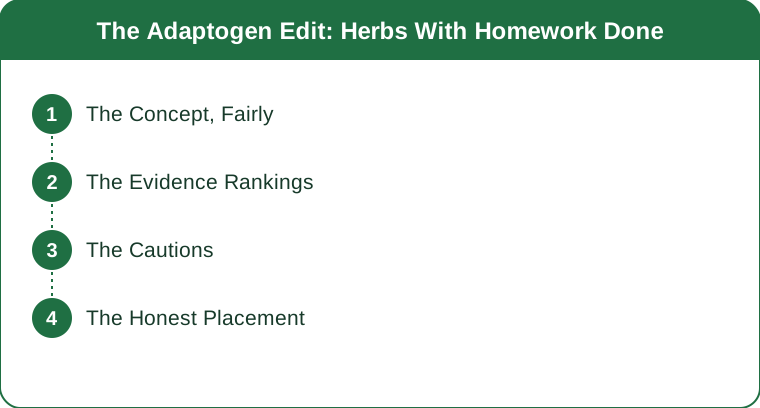
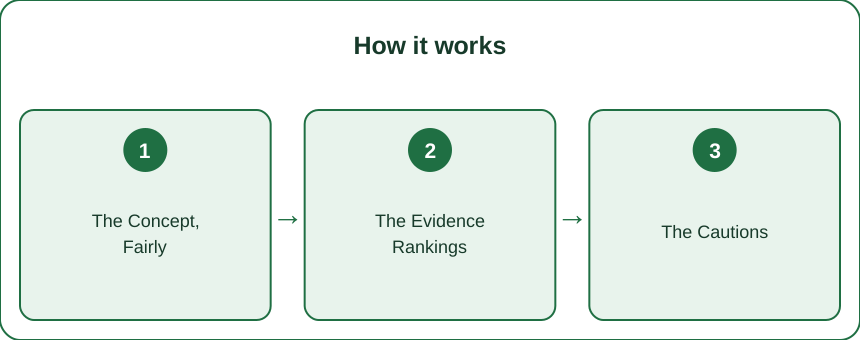
The Concept, Fairly
What ‘adaptogen’ means: a class of herbs proposed to normalize stress responses — supporting the system under load rather than pushing it one direction. The concept has real research roots (mid-century Soviet-era studies onward) and a fair criticism: the definition is loose enough that marketing stretched it over everything. The honest frame: some individual herbs have respectable clinical trials; the CATEGORY halo is where skepticism belongs. Herb by herb is the only honest review.
The Evidence Rankings
The tier list, by current research: ashwagandha leads (multiple randomized trials showing reduced stress and cortisol markers and improved sleep — modest effects, real signal; the one with genuine homework), rhodiola places (decent trials on fatigue and stress-related exhaustion — the daytime-leaning option), and the mushroom tier is promising-but-earlier (lion’s mane’s cognitive findings are interesting and small; reishi’s calm-and-sleep traditions outrun its trials; cordyceps’ exercise claims are thin) — while the latte-menu long tail (maca, holy basil and friends) runs on tradition and early studies more than robust evidence. The pattern: effects are modest, gradual and most visible in genuinely stressed people — the adaptogen story is repletion-adjacent, like magnesium’s.

The Cautions
The fine print the lattes skip: quality is the industry’s real problem (herbal supplements are lightly regulated — third-party testing matters more here than almost any category), interactions are real (thyroid medication and ashwagandha, sedatives and the calm-herbs — the pharmacist thirty-seconds applies), pregnancy is a pause-the-category situation, cycling is commonly advised (the take-breaks convention — evidence light, logic reasonable), and the recent liver-caution notes around high-dose ashwagandha earn the ‘stick to studied doses’ rule. Herbs are pharmacology wearing a garden’s PR.
The Honest Placement
Where adaptogens belong: AFTER the foundations (the sleep, movement, breathwork and boundaries that do the heavy stress-lifting — no herb out-performs a fixed bedtime; the cortisol-reset levers are the real adaptogens), as a considered trial not a subscription reflex (one herb, studied dose, 6-8 weeks, honest self-assessment — the one-variable rule from skincare applies to supplements), and as ritual where ritual helps (the mushroom latte’s warmth and pause have value the powder alone doesn’t — the tea-ritual effect is real and free to admit). The verdict: a category with a few genuine performers, a lot of passengers, and a marketing budget the evidence hasn’t earned yet — buy the studied ones, or just take the nap.
Ashwagandha has homework, quality is the risk, foundations first, one herb at a time. Adaptogens are herbs with mixed report cards — read the grades, not the latte menu.
Keep Reading
This article is for general informational purposes only and is not medical advice. Always consult a qualified health professional for guidance specific to you.