The Adaptogen Label Red Flags That Mean You're Probably Wasting Your Money
Quick Answer: Look for standardized extract percentages, third-party testing certifications, and clearly stated dosages on the label — vague terms like ‘proprietary blend’ without specific milligram amounts per ingredient are the biggest red flag that a product is underdosed or low quality.
The adaptogen aisle looks the same at every price point — nice packaging, confident claims, a soothing color palette. The actual difference between an effective product and a waste of money is on the label, if you know where to look.

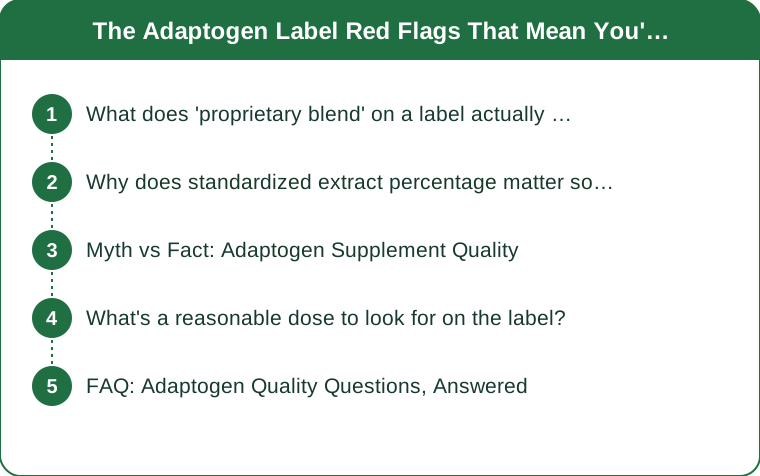
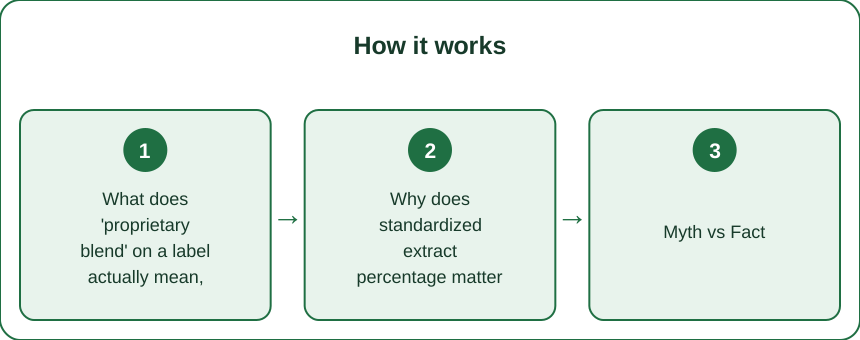
What does ‘proprietary blend’ on a label actually mean, and why does it matter?
It means the company isn’t required to disclose how much of each individual ingredient is in the blend, only the total combined weight — which allows a token amount of an expensive adaptogen alongside mostly filler, while still listing it prominently on the front of the package.
A quality product instead lists specific milligram amounts for each individual ingredient, letting you compare the actual dose against the amounts used in research studies for that adaptogen.
Why does standardized extract percentage matter so much?
Because raw herb powder and a standardized extract (guaranteed to contain a specific percentage of the active compound, like ‘5% withanolides’ for ashwagandha) can have wildly different potency even at the same weight.
A product listing only ‘ashwagandha root powder 500mg’ with no standardization percentage gives you no real information about how much active compound you’re actually getting — it could be potent or nearly inert.
Myth vs Fact: Adaptogen Supplement Quality
Myth: A higher price always means a higher-quality product. Fact: Price correlates weakly with quality — some expensive brands still use proprietary blends and unstandardized extracts, while some mid-priced brands disclose everything clearly.
Myth: Third-party testing certifications are just marketing. Fact: Certifications like USP, NSF, or ConsumerLab verification involve actual independent lab testing for potency and contaminants — they’re a genuinely meaningful quality signal.
Myth: ‘Organic’ certification tells you about potency. Fact: Organic certification addresses growing practices, not active compound concentration — a product can be organic and still underdosed.
What’s a reasonable dose to look for on the label?
It varies by adaptogen, but as a general check: compare the listed dose against amounts used in the clinical studies for that specific herb — for ashwagandha, most positive studies use 300-600mg of a standardized extract daily, so a product listing far below that range likely won’t match the studied effects.
A quick search of the specific adaptogen plus ‘clinical dose’ before buying takes two minutes and tells you more than the packaging will.
FAQ: Adaptogen Quality Questions, Answered
Are gummies as effective as capsules for adaptogens?
Gummies often contain lower doses than capsules due to taste and texture limits — check the milligram amount specifically rather than assuming format doesn’t matter.
Does third-party testing guarantee the product works?
No — it guarantees the product contains what the label claims and is free of tested contaminants, not that the dose is clinically effective; check both.
Is it worth paying more for a standardized extract over raw powder?
Generally yes, if consistent, predictable potency matters to you — raw powder potency can vary significantly between batches.
TL;DR:
- ‘Proprietary blend’ without individual milligram amounts is the biggest quality red flag
- Standardized extract percentages matter more than total ingredient weight
- Third-party testing certifications are a genuine quality signal, unlike price alone
- Compare the label’s dose against clinically studied amounts for that specific adaptogen
The difference between an effective adaptogen and an expensive placebo is usually printed right on the label — it just takes knowing what to look for.
Keep Reading
This article is for general informational purposes only and is not medical advice. Always consult a qualified health professional for guidance specific to you.