5 Signs Your Adaptogens Are Actually Working (Not Just a Placebo)
Quick Answer: Real adaptogen response shows up as steadier energy across the day, faster recovery from stress spikes, and better sleep onset — not a dramatic ‘high.’ If you’re waiting to feel something big, you’re checking for the wrong signal.
Adaptogens don’t hit like caffeine. There’s no clock-watching moment where you suddenly feel it kick in, which is exactly why so many people quit after two weeks assuming nothing happened.

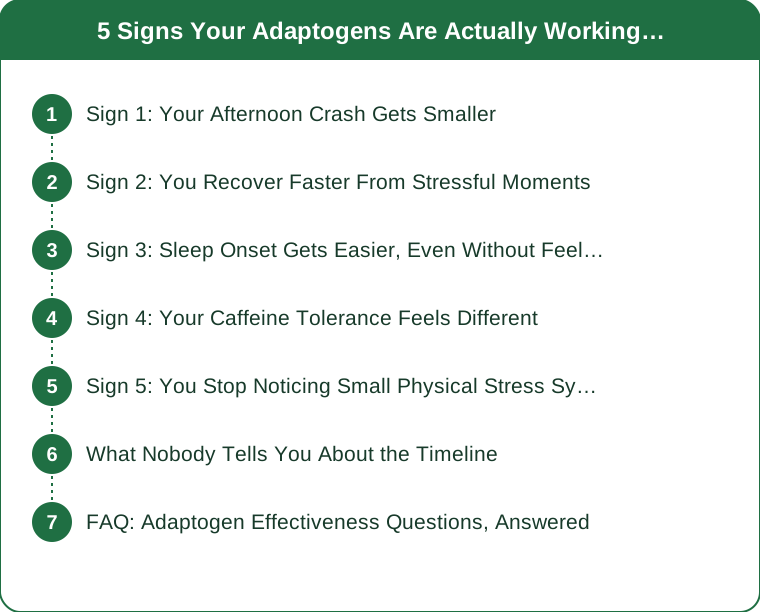
Sign 1: Your Afternoon Crash Gets Smaller
The clearest early sign isn’t more energy — it’s a flatter energy curve. Instead of a hard 2pm crash, you get a mild dip that doesn’t send you reaching for a second coffee. Track this for two weeks on a simple 1-10 energy scale at 2pm daily; a rise from a 3 to a 6 is a real signal, not noise.
Sign 2: You Recover Faster From Stressful Moments
Adaptogens are named for helping the body ‘adapt’ its stress response, so the effect shows up in recovery speed, not stress prevention. A stressful email used to leave your heart racing for an hour — now it settles in fifteen minutes. That shortened recovery window is the actual mechanism at work.
Sign 3: Sleep Onset Gets Easier, Even Without Feeling Sleepy Earlier
This one surprises people. Ashwagandha and reishi in particular tend to lower cortisol enough that lying down and actually falling asleep takes less tossing and turning, even if you don’t feel more tired during the day. If you’re falling asleep in 15 minutes instead of 45, that’s working.

Sign 4: Your Caffeine Tolerance Feels Different
Some people find they need less coffee to feel normal once an adaptogen routine is established, because the jittery-then-crashing caffeine pattern smooths out. Others notice the opposite — caffeine feels stronger because their baseline stress-jitteriness has dropped, making the caffeine effect more distinct rather than blended into background anxiety.
Sign 5: You Stop Noticing Small Physical Stress Symptoms
Jaw clenching, shoulder tension, and stress-related stomach unease are often the first things to fade — usually before any mood change. These are easy to miss because they disappear quietly rather than announcing themselves, so it helps to have consciously noted them as a baseline before starting.
What Nobody Tells You About the Timeline
Most adaptogens need 2-4 weeks of consistent daily use before effects are reliably noticeable, and some (like ashwagandha for sleep) can take up to 6-8 weeks for full effect. Skipping doses resets part of that buildup, so consistency matters more than the specific time of day you take it.
FAQ: Adaptogen Effectiveness Questions, Answered
How long before I should give up if nothing’s changed?
Give it a full 6 weeks of daily, consistent dosing before concluding it isn’t working — most people who quit early never reached the buildup window.
Can I feel adaptogens working the same day I start?
Rarely, and if you do feel something dramatic and immediate, it’s more likely a caffeine or stimulant additive in the product than the adaptogen itself.
Should I cycle adaptogens to keep them working?
Many people take 5-6 days on, 1-2 days off, or cycle off entirely for a week each month — this helps avoid tolerance without losing the cumulative benefit.
TL;DR:
- Real signs are subtle: flatter energy curve, faster stress recovery, easier sleep onset
- Track a simple daily energy score for two weeks instead of guessing
- Full effects typically take 2-6 weeks of consistent daily use
- No dramatic ‘kick in’ moment — that’s stimulants, not adaptogens
If you’re checking for a caffeine-like jolt, you’ll always conclude adaptogens ‘don’t work.’ Check the quieter signals instead, and give it the full six weeks before deciding.
Keep Reading
This article is for general informational purposes only and is not medical advice. Always consult a qualified health professional for guidance specific to you.