5 Ways to Take Ashwagandha Without the Aftertaste
Quick Answer: Ashwagandha powder tastes bitter and horsey because of its withanolide and alkaloid content, and water does almost nothing to hide it. Fat, warmth, and strong aromatics do. The five reliable carriers are warm milk with cinnamon, a nut butter spoon, a cocoa base, a citrus-ginger shot, and simply switching to capsules - each covers a different situation.
Most people do not quit ashwagandha because it did not work. They quit because week one was fine on willpower and week two the taste won. Consistency is the entire point with adaptogens, so solving the taste is not a trivial concern - it is the whole adherence problem.

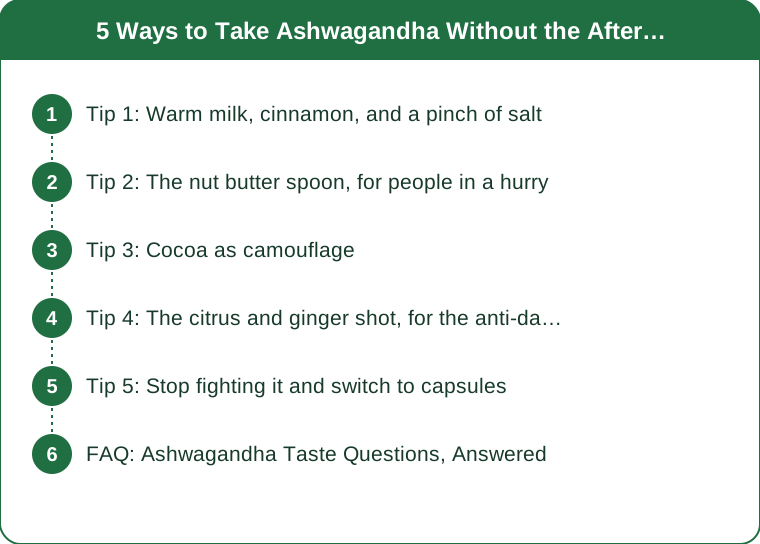
Tip 1: Warm milk, cinnamon, and a pinch of salt
This is the traditional carrier and still the best one, and the reason is chemistry rather than tradition.
Withanolides are fat-soluble, so fat in the carrier does two jobs at once: it coats the bitter compounds so they hit fewer taste receptors, and it gives the actives something to dissolve into. Warm liquid also volatilises the aromatics in the spice, which occupies your nose while the bitterness passes.
A practical version: 250ml of warm milk of any kind, half a teaspoon of ashwagandha, a quarter teaspoon of cinnamon, a tiny pinch of salt, and honey to taste. Whisk rather than stir - powder that clumps releases a concentrated bitter hit when you reach the bottom of the mug.
The salt is the part people leave out and it does more than the honey does. Salt suppresses bitterness perception directly, which is why a pinch works better than another spoon of sweetener.
Oat and coconut milk both work well here; skimmed dairy is the weakest option because there is less fat to do the coating. Take it in the evening if you find it settling, which many people do.
Tip 2: The nut butter spoon, for people in a hurry
Ninety seconds, no washing up, and it is the most reliable method for anyone who takes their supplement standing in the kitchen at 7am.
Put a heaped teaspoon of any nut butter in a small bowl or straight on a spoon, add the ashwagandha, and mix it into the butter with the tip of a knife until the colour is even. Eat it in one go, follow with water.
Why it works so well: nut butter is roughly half fat and extremely sticky, so the powder never gets a chance to disperse across your tongue. It also has its own strong roasted flavour running interference.
A few upgrades if you want them: a few drops of vanilla, a scrape of cocoa, or a small square of dark chocolate eaten straight after.
The one thing to avoid is doing this with a runny, low-fat nut butter - the powder disperses instead of staying bound, and you get the bitterness in a thin coating that lasts longer than the drink method. Thick and stiff is the goal.
Tip 3: Cocoa as camouflage
Cocoa is bitter itself, which sounds counterproductive and is actually the trick.
Your palate reads bitterness in categories rather than as a single scale. A strong, familiar, wanted bitterness like cocoa gives the unfamiliar herbal bitterness somewhere to hide. This is the same principle behind coffee masking almost anything.
The build: 200ml of warm milk, one heaped teaspoon of unsweetened cocoa, half a teaspoon of ashwagandha, a pinch of salt, sweetener to taste. Optional quarter teaspoon of cinnamon or cardamom.
Make it with a small amount of the liquid first to form a paste, then add the rest. Cocoa and ashwagandha both clump badly if you dump them into a full mug.
This is the best option for anyone who found the plain milk version still too herbal. It is also the easiest one to make appealing enough that you will still be doing it in month three, which matters far more than any marginal difference in absorption.
Skip this one in the evening if cocoa keeps you awake - it contains a small amount of theobromine and caffeine.

Tip 4: The citrus and ginger shot, for the anti-dairy crowd
If milk-based drinks are not your thing, go the opposite direction: small volume, high intensity, over fast.
The build: juice of half a lemon, 50ml of water or orange juice, a small knob of grated fresh ginger, half a teaspoon of ashwagandha, and a little honey. Shake hard in a jar and drink in one.
This works on a different principle from the fat methods. Acidity and pungency are loud enough to arrive first and clear last, and the small volume means the whole thing is over in two seconds rather than spread across a ten-minute mug.
Two honest limitations. First, there is no fat here, so if you have been told to take yours with food for absorption, pair it with breakfast. Second, this one is harsh on an empty stomach for some people, especially with the ginger.
It is genuinely the best travel method though - lemon and a sachet of powder work in a hotel room where a whisk and warm milk do not.
Tip 5: Stop fighting it and switch to capsules
There is no prize for taking powder. If four attempts at masking it have failed, the practical answer is a capsule, and it is worth saying plainly because a lot of people feel they are doing it wrong.
What you gain: zero taste, precise and repeatable dosing, and something you will actually take on a busy Tuesday. What you lose: the small ritual, some flexibility in dose, and usually a bit of cost per serving.
When you switch, check three things on the label: the extract standardisation (the withanolide percentage tells you far more than the milligram number alone), whether it is root-only or root-and-leaf, and the serving size in capsules rather than in milligrams so you know what you are actually swallowing.
A reasonable hybrid many people land on: capsules on weekdays, the milk drink at weekends when the ritual is the point. Adherence is the active ingredient. The best-absorbed preparation you abandon in week two loses to the mediocre one you take for six months.
FAQ: Ashwagandha Taste Questions, Answered
Does mixing it into hot liquid destroy the actives?
Withanolides are reasonably heat-stable at drinking temperatures. Warm milk is a traditional preparation for good reason. Boiling it hard for a long period is not necessary and is not doing anything useful.
Why does mine taste much worse than my friend’s?
Root-only powder is milder than root-and-leaf. Extract strength, freshness, and storage all shift the intensity too - powder kept open in a warm cupboard goes noticeably harsher within a couple of months.
Can I just put it in a fruit smoothie?
You can, and it works better with a fatty base like banana, avocado, or yoghurt than with a purely fruity one. Thin, watery fruit smoothies tend to leave the bitterness clearly detectable at the finish.
Is it better on an empty stomach?
Many people find it gentler with food, and food adds the fat that helps a fat-soluble compound along. If you have a health condition, take medication, or are pregnant or breastfeeding, check with a professional before starting. This is general information, not medical advice.
TL;DR:
- Bitterness is fat-soluble - fat, warmth, and strong aromatics beat water every time
- Warm milk with cinnamon and a pinch of salt is still the most reliable method
- A stiff nut butter spoon is the fastest, cocoa is the best camouflage, citrus-ginger travels
- Salt suppresses bitterness better than adding more sweetener
- If none of it sticks, capsules are a legitimate answer, not a failure
Adaptogens only do anything on a timescale of weeks, which means the method you can repeat on an ordinary rushed morning beats the one that is theoretically optimal. Pick the pairing that fits your kitchen and your schedule, and stop grading yourself on how you get it down.
Keep Reading
This article is for general informational purposes only and is not medical advice. Always consult a qualified health professional for guidance specific to you.