5 Late-Summer Adaptogen Rituals That Fit a Hot Week
Quick Answer: In hot weather the useful adaptogen rituals are the cold ones you will actually finish: a chilled tulsi infusion in the morning, a cold ashwagandha milk in the evening, an iced reishi in the late-afternoon dip, a mint-and-holy-basil cooler after training, and a simple electrolyte base underneath all of it. Consistency matters more than dose, and heat is exactly when consistency slips.
The warm mug that carried you through spring stops being appealing at 31 degrees. Most people do not swap the ritual - they just quietly drop it for six weeks and start again in autumn.

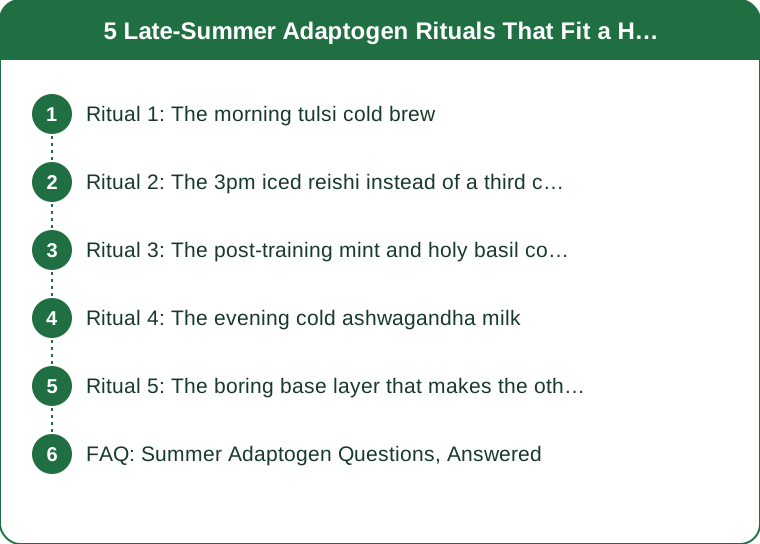
Ritual 1: The morning tulsi cold brew
Made the night before, drunk within ten minutes of waking, and it takes ninety seconds of actual effort.
How to make it: put 2 teaspoons of dried tulsi (holy basil) in a jar with 500ml of cold water, lid on, into the fridge overnight. In the morning, strain and drink. That is the whole method - no kettle, no waiting, no washing up beyond a strainer.
Why cold brew rather than hot and chilled: cold extraction pulls fewer tannins, so the result is noticeably smoother and less bitter, which matters a lot for whether you finish it in August.
What it is for: tulsi is traditionally used as a daily-tone adaptogen rather than a strong stimulant, and it sits comfortably alongside coffee if that is already part of your morning. Many people find it works best as the first drink, ahead of coffee, purely because it gets fluid in before caffeine.
The consistency trick: make two jars at once on Sunday and Wednesday. The ritual survives a hot week because the decision has already been made for you.
Ritual 2: The 3pm iced reishi instead of a third coffee
The late-afternoon dip in summer is often part heat, part dehydration, and part the tail of a large lunch. A fourth coffee at 3pm mostly borrows against your sleep.
How to make it: 1 teaspoon of reishi powder, a splash of hot water to dissolve it properly (this step matters - powder in cold liquid clumps), then top with 200ml of cold water or oat milk and ice. A small amount of maple or honey makes the earthiness much easier, and there is no virtue in drinking it plain if that means not drinking it.
What it is for: reishi is used traditionally for a calm, non-stimulating steadiness rather than a lift. It is not a caffeine substitute in the sense of producing alertness - it is a substitute for the ritual of making a drink at 3pm, which is often the real function of that fourth coffee.
Timing note: if you are sensitive to feeling drowsy, keep this before 4pm. Some people prefer reishi entirely in the evening for that reason.
Skip it if you are already sleeping poorly in the heat and caffeine is not the cause - solve the room temperature first, since no drink fixes a 26-degree bedroom.
Ritual 3: The post-training mint and holy basil cooler
This is the one that earns its place in high summer, because it doubles as rehydration.
How to make it: brew 1 teaspoon tulsi with a small handful of fresh mint in 200ml of hot water for four minutes, then pour over ice and top with another 200ml cold water. Add a pinch of salt and a squeeze of lime - this turns a herbal tea into something that actually replaces what a sweaty session took out.
Why the salt is not optional: a 45-minute session in heat can cost meaningfully more sodium than the same session indoors. Drinking plain water in volume after a hot session can leave you feeling flat rather than restored. The pinch of salt is doing more work here than the herbs are.
What it is for: cooling, palatable rehydration with a calming herbal base, at the moment when most people either drink nothing or drink something very sugary.
Make it in advance: brew a concentrated batch, keep it in the fridge, and dilute with ice water after training. Nobody brews tea at the end of a hot workout.

Ritual 4: The evening cold ashwagandha milk
The classic version is a warm bedtime drink, which nobody wants in August. The cold version works just as well and gets drunk.
How to make it: half a teaspoon of ashwagandha powder whisked into 200ml of cold oat or dairy milk, with a small amount of honey and a pinch of cinnamon or cardamom. Whisk properly or blend for five seconds - undissolved ashwagandha is unpleasantly gritty and is the reason most people abandon it.
When: roughly 60 to 90 minutes before bed, alongside whatever else already signals wind-down. The consistency of timing does more than the amount does.
What it is for: ashwagandha is the most-studied of the common adaptogens and is traditionally used for evening calm and stress-load support. It is a slow one - most reported benefit shows up over weeks of daily use, not in a single evening, so treat a first-night non-response as normal rather than a failure.
Important caveats: ashwagandha is not appropriate for everyone. If you are pregnant or breastfeeding, have a thyroid condition, take sedatives or thyroid medication, or have a liver condition, check with a healthcare professional first. This is general information, not medical advice.
Ritual 5: The boring base layer that makes the other four work
This is the least interesting ritual and the one most likely to be the actual reason a hot week feels bad.
Fluid and sodium, tracked loosely. In hot weather, the difference between a good day and a foggy one is frequently 1 to 2 litres of fluid and the sodium to hold it, not any herb. Adaptogens layered on top of mild dehydration will not feel like they are working, and you will conclude the herbs are useless.
The simple base: a large glass of water with a pinch of salt on waking, a bottle you actually keep on the desk, and one electrolyte drink on any day with a sweaty session or a long spell outdoors.
Consistency over stacking. Two adaptogens taken daily for six weeks will do more for you than five taken erratically for two. If a hot week is disrupting things, cut down to one ritual and keep it rather than trying to hold all five and dropping the lot by Thursday.
Give it a fair window. Most traditional adaptogen use assumes 4 to 8 weeks of consistency before judging. Late summer is a reasonable time to start a run that carries you into autumn, when the warm versions become appealing again.
FAQ: Summer Adaptogen Questions, Answered
Can I take more than one adaptogen a day?
Many people do, commonly a daytime one and an evening one. Start with one for two weeks so you know what it does for you, then add a second. Starting three at once means you learn nothing about any of them.
Does heat or cold change how well they work?
The temperature of the drink does not meaningfully change the compounds you get from a proper infusion. What it changes is whether you drink it, which in August is the whole ballgame.
How long before I notice anything?
Most traditional and study protocols run 4 to 8 weeks of daily use. Anything you feel on day one is more likely to be the ritual, the hydration, or the break itself - which are genuinely useful too, just not the herb.
Are adaptogens safe with medication?
Not automatically. Several interact with thyroid, sedative, immunosuppressant, and blood pressure medications. Check with a pharmacist or doctor before starting if you take anything regularly. This is general information, not medical advice.
TL;DR:
- Cold-format rituals survive a hot week; warm mugs quietly get dropped for six weeks
- Morning tulsi cold brew, 3pm iced reishi, post-training mint cooler with salt, evening cold ashwagandha milk
- Dissolve powders in a splash of hot liquid first or they clump and you stop drinking them
- The salt in the post-training cooler is doing more than the herbs on a sweaty day
- Give any adaptogen 4 to 8 weeks of consistency, and check interactions if you take medication
Heat does not make adaptogens less useful - it makes the usual delivery method unappealing, which looks the same from the outside. Swap the format, keep the timing, and the run carries straight through to autumn instead of restarting in October.
Keep Reading
This article is for general informational purposes only and is not medical advice. Always consult a qualified health professional for guidance specific to you.