5 Adaptogen Setups for the First Two Weeks Back on a School-Year Schedule
Quick Answer: The back-to-school reset is a circadian problem wearing a stress costume. Wake times jump forward an hour or more, evenings compress, and the fallout shows up as morning grogginess, a 3pm crash, and a wired-but-tired bedtime. Match the adaptogen to the specific failure: rhodiola for the early alarm, L-theanine with your coffee for the jittery first week, ashwagandha in the evening for the wired bedtime, tulsi for the low-grade all-day tension, and reishi as the wind-down anchor. Give any of them two to four weeks before judging.
The first two weeks of a school-year schedule undo a summer of decent sleep in about four days. Five setups below, each built for a different way that unravels - use the one that matches your actual symptom rather than stacking all of them at once.

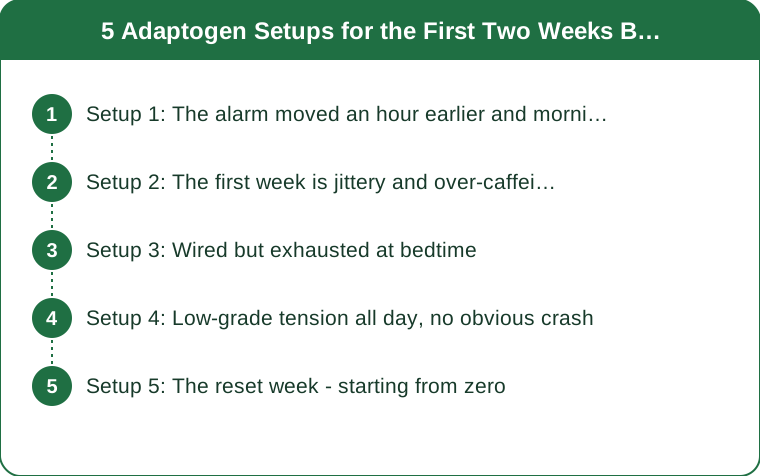
Setup 1: The alarm moved an hour earlier and mornings hurt
The failure: you were waking at 7:30 in August and now it is 6:15, but your body clock did not get the memo. Melatonin is still finishing its shift when the alarm goes off, which is why the first 90 minutes feel underwater.
The stack: rhodiola rosea, 200 to 400 mg standardized extract, taken on an empty stomach within 30 minutes of waking - it has a reputation for reducing the sensation of fatigue during exactly this kind of adjustment, and it is stimulating enough that afternoon doses interfere with sleep. Pair it with 10 minutes of outdoor light before 8am, which is doing most of the actual circadian work.
Why this pairing: rhodiola handles how the morning feels while the light exposure moves the underlying clock. Supplement without light is a patch; light without the supplement is effective but slower and rougher for the first week.
The mistake to avoid: doubling coffee instead. Adding a second cup pushes caffeine into the afternoon window, which delays sleep onset that night and deepens the deficit you are trying to close. Keep coffee where it was and move the wake-up light earlier.
Setup 2: The first week is jittery and over-caffeinated
The failure: you are compensating for short sleep with more caffeine, and now you are alert in a brittle, jaw-clenched way that makes school drop-off and the 9am meeting feel identical.
The stack: L-theanine, 100 to 200 mg, taken with your coffee rather than instead of it. The theanine-plus-caffeine pairing is one of the better-supported combinations in this category, and the practical effect people describe is the same alertness without the edge.
Add if needed: magnesium glycinate, 200 to 300 mg in the evening, which addresses the tension side rather than the alertness side.
Why this pairing: it fixes the quality of the caffeine you are already drinking instead of asking you to quit caffeine during the single worst week to quit caffeine.
The mistake to avoid: treating the jitter as a sign you need a calming adaptogen in the morning. Sedating yourself at 7am and stimulating yourself at 7am simultaneously is a wash - handle the edge, keep the alertness.

Setup 3: Wired but exhausted at bedtime
The failure: the day ends at 10pm, you are finally still, and your nervous system chooses that exact moment to file every unresolved item from the day. Classic compressed-evening cortisol.
The stack: ashwagandha, 300 to 600 mg of a standardized root extract, taken in the evening with food - the timing matters more than most people think, and evening dosing suits the wired-at-night pattern better than the morning dosing most labels suggest. Give it two to four weeks; this is not a same-night effect.
Add if needed: a reishi or chamomile drink 60 to 90 minutes before bed as the ritual half of the intervention.
Why this pairing: ashwagandha works on the baseline over weeks while the evening drink provides the immediate behavioral cue that the day is closed.
The mistake to avoid: starting it the night before the first day of school and concluding it does not work by Thursday. Also worth knowing: ashwagandha is a nightshade-family plant, interacts with thyroid medication and sedatives, and is not appropriate during pregnancy - it is the one in this list that most warrants a check with your doctor first.
Setup 4: Low-grade tension all day, no obvious crash
The failure: nothing dramatic - just a constant background hum of logistics, a shortened fuse by 5pm, and shoulders somewhere near your ears. The schedule change did not break your sleep; it filled every gap in your day.
The stack: tulsi (holy basil) as tea, two to three cups spread across the day, or 300 to 600 mg in capsule form. It is the gentlest option here and the one that suits an all-day pattern rather than a specific window.
Add if needed: a genuinely non-negotiable 10-minute outdoor walk after lunch, which does more for afternoon tension than any capsule and also supports the circadian reset from Setup 1.
Why this pairing: tulsi is mild enough to take repeatedly without an alertness swing in either direction, and the tea ritual forces the pauses the schedule stopped giving you.
The mistake to avoid: escalating straight to the strongest thing on the shelf for a symptom this diffuse. Low-grade tension responds better to frequency than to potency.
Setup 5: The reset week - starting from zero
The situation: you took the summer off from all of it and want a clean, honest restart rather than five bottles at once.
The stack, in order: week one, nothing new except light in the morning and a fixed bedtime. Week two, add one adaptogen matched to your loudest symptom from the four setups above. Week three, hold and observe. Week four, add a second only if a distinct second symptom is still present.
Why this sequencing: starting three supplements the same week makes it impossible to know which one worked, which one caused the stomach upset, and which one you are paying for unnecessarily. One variable at a time is not slow - it is the only way to end up with a stack you can defend.
What to track: wake time, time to fall asleep, and one subjective 1-to-10 energy score at 3pm. Three numbers, 30 seconds a day. If those three have not moved by week four, the supplement is not the lever - sleep timing, light, or workload is.
The mistake to avoid: judging any of this during the first five days. The schedule change itself is the biggest variable in the room for at least two weeks; supplements evaluated inside that window get credit and blame they have not earned.
This is general information, not medical advice. Adaptogens can interact with medications - including thyroid, sedative, blood pressure, and blood sugar drugs - and are not appropriate during pregnancy or breastfeeding. Check with a healthcare professional before starting.
TL;DR:
- The back-to-school slump is mostly a circadian shift; morning outdoor light does more than any capsule and should come first.
- Match the tool to the symptom: rhodiola for early-alarm fatigue, theanine with coffee for jitter, evening ashwagandha for wired bedtimes, tulsi for all-day tension.
- Add one thing at a time and give it two to four weeks - stacking three at once makes the result uninterpretable.
- Track wake time, sleep latency, and a 3pm energy score; if those do not move by week four, the lever is elsewhere.
- Ashwagandha carries the most interaction cautions in this list - clear it with a professional if you take medication.
The schedule is not going to soften, but the first two weeks are the worst of it. Pick the one setup that matches how your reset is actually failing, run it properly, and let the calendar do the rest.
Keep Reading
This article is for general informational purposes only and is not medical advice. Always consult a qualified health professional for guidance specific to you.