5 Timing Windows That Change How Adaptogens Actually Feel
Quick Answer: Adaptogen timing matters as much as dose for how the effect feels. Energising adaptogens like rhodiola and eleuthero work best in the morning window before 10am; calming ones like ashwagandha and reishi suit the evening window 1 to 2 hours before bed. Taking a stimulating adaptogen after 2pm is the single most common reason people report that it disrupted their sleep.
Most people take their adaptogen whenever they remember, then judge the herb by that result. Timing is the cheapest variable you can change, and it’s usually the one doing the damage. Here are the five windows.

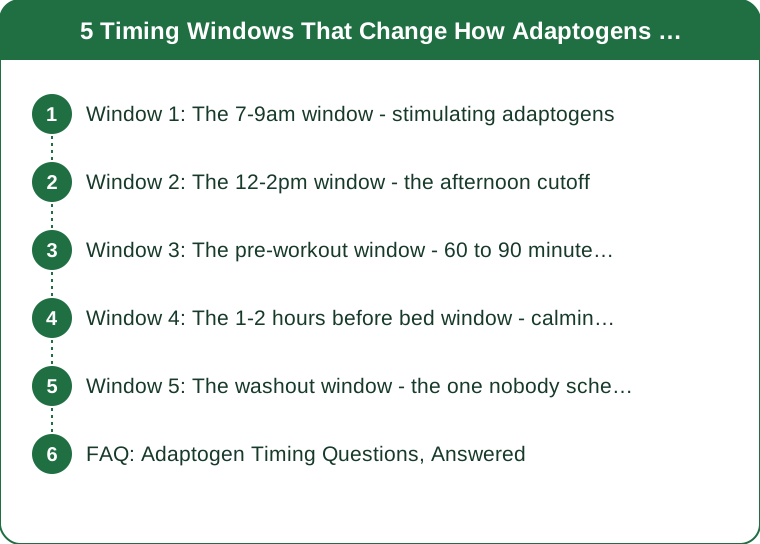
Window 1: The 7-9am window - stimulating adaptogens
This is where rhodiola, eleuthero, and ginseng belong, and it’s the window with the clearest evidence behind the timing.
These herbs interact with your alertness and stress-response systems in a way that broadly rises with your natural morning cortisol curve rather than fighting it. Taken here, the effect most people describe is a smoother morning rather than a stimulant hit.
Practical notes for this window:
- Take it with or just after breakfast if it bothers your stomach empty - rhodiola in particular is more tolerable with food
- Keep it at least 30 minutes away from coffee if you’re sensitive; stacking both at once is where the jittery reports come from
- Typical rhodiola doses used in research sit around 200-400mg daily of a standardised extract
Who this window suits: anyone whose main complaint is mid-morning fog or a slow start, and anyone who has tried an adaptogen in the afternoon and found it made them wired at night.
The mistake people make here is doubling the dose when the morning effect is subtle. Adaptogens are cumulative - they typically need two to four weeks of consistent use before the effect is fair to judge.
Window 2: The 12-2pm window - the afternoon cutoff
This is less a window than a boundary, and it’s the most useful single rule in this article.
2pm is the practical cutoff for anything stimulating. Rhodiola’s effect on alertness can persist for hours, and for people who are sensitive, a 3pm dose is a 10pm problem. The pattern is consistent enough that if you’ve concluded “adaptogens ruin my sleep,” the first thing to check is the clock, not the herb.
What does work in this window:
- Cordyceps, if you’re training in the late afternoon and want it on board for the session
- Adaptogens taken with lunch for digestive comfort, if morning-empty-stomach dosing has been rough
- A half dose of your morning herb, if you’re splitting a daily total across two servings
A useful habit: set the cutoff as a phone alarm for the first two weeks. Almost everyone who breaks this rule breaks it by accident, not by choice.
Window 3: The pre-workout window - 60 to 90 minutes before
If you’re taking an adaptogen for training rather than for stress, the timing changes.
Cordyceps is the most commonly used here, generally taken 60-90 minutes before a session. The research on exercise performance is genuinely mixed and the effects reported are modest, so treat this as a small-margin tool rather than a pre-workout replacement.
What not to do in this window: take your calming adaptogen before a session because you’re anxious about it. Ashwagandha’s effect isn’t fast-acting in a way that helps pre-session nerves, and it isn’t designed to be.
A realistic expectation setting: if you notice a difference in perceived effort within the first week, that’s more likely to be the routine and the timing structure than the herb. Judge it at week four, comparing sessions of similar type and similar sleep.
One genuine caution: if you’re a competitive athlete under a testing programme, check supplement certification, because contamination rates in the broader supplement category are non-trivial.

Window 4: The 1-2 hours before bed window - calming adaptogens
This is where ashwagandha and reishi do their best work, and it’s the window most people get closest to right by instinct.
Ashwagandha’s most consistent research signal is on perceived stress and sleep quality, with commonly studied doses around 300-600mg daily of a standardised root extract. The evening window suits it because you’re not asking it to do anything against your natural rhythm.
How to run this window well:
- Same time every night. Consistency matters more than the exact hour
- With a small amount of fat if you’re using an oil-soluble form - a few nuts is enough
- Not with alcohol, which undoes the sleep-quality effect you’re paying for
- Reishi is often taken as a warm drink, which adds a wind-down ritual on top of the herb itself - part of the effect for many people
A reasonable test: keep the window and the dose fixed for three weeks, and rate your sleep 1-10 each morning before checking anything else. Retrospective memory of sleep is unreliable; a daily number isn’t.
Window 5: The washout window - the one nobody schedules
The fifth window is the one where you take nothing, and it’s the one that tells you whether any of this is working.
After eight to twelve weeks of consistent use, a one to two week break does two useful things. It tells you what your baseline actually feels like now, and it interrupts the slow drift where a supplement becomes a habit you can no longer evaluate.
What to watch during a washout:
- Sleep quality in the first four nights - the clearest signal for evening adaptogens
- Mid-morning energy in week one - the clearest signal for morning ones
- Whether you notice anything at all, honestly. Plenty of people don’t, and that’s a legitimate and money-saving result
The counterintuitive part: people who take a break and notice nothing often assume the herb never worked. Sometimes true. But adaptogens are slow in both directions - the effect can also fade slowly enough that week one of a washout looks like nothing changed. Give it the full two weeks before concluding.
Adaptogens interact with thyroid medication, sedatives, immunosuppressants, and blood sugar medication, among others, and several are not appropriate in pregnancy. This is general information, not medical advice - check with a pharmacist or doctor before adding one, especially if you take anything daily.
FAQ: Adaptogen Timing Questions, Answered
Can I take two different adaptogens on the same day?
Commonly done - a stimulating one in the morning and a calming one at night is the standard pairing. Introduce them one at a time, two weeks apart, so you can tell which is doing what.
Does it matter if I take them with food?
For absorption, mostly no. For tolerance, yes - several are easier on an empty stomach for some people and much harder for others. If you get nausea, move it to a meal before you abandon the herb.
What if I miss a dose?
Skip it and continue. Doubling up doesn’t catch you up, and for stimulating adaptogens a doubled dose late in the day is precisely the mistake this article is about.
How long before I should expect anything?
Two to four weeks of consistent daily use is the fair judging point for most adaptogens. Anything you feel on day one is more likely to be expectation or caffeine than adaptation.
TL;DR:
- Stimulating adaptogens (rhodiola, eleuthero, ginseng): 7-9am window
- Hard cutoff at 2pm for anything stimulating - this fixes most “it ruined my sleep” reports
- Cordyceps for training: 60-90 minutes pre-session, modest expectations
- Calming adaptogens (ashwagandha, reishi): 1-2 hours before bed, same time nightly
- Schedule a 1-2 week washout every 8-12 weeks to find out if it’s working at all
Timing is free, and it changes the result more than switching brands does. Fix the clock first, then judge the herb.
Keep Reading
This article is for general informational purposes only and is not medical advice. Always consult a qualified health professional for guidance specific to you.