5 Afternoon Coffee Swaps That Won't Wreck Your Sleep
Quick Answer: Caffeine has a half-life of roughly 5 to 6 hours, so a 3pm coffee still has meaningful caffeine in your system at bedtime. The five swaps below range from low-caffeine to caffeine-free, and the one that works is the one that matches what you actually want from the coffee - warmth, ritual, alertness, or a break from your desk.
The afternoon coffee is rarely about caffeine alone. It’s a break, a warm thing, a reason to stand up. Any replacement that ignores that fails by Thursday. Here are five that don’t.

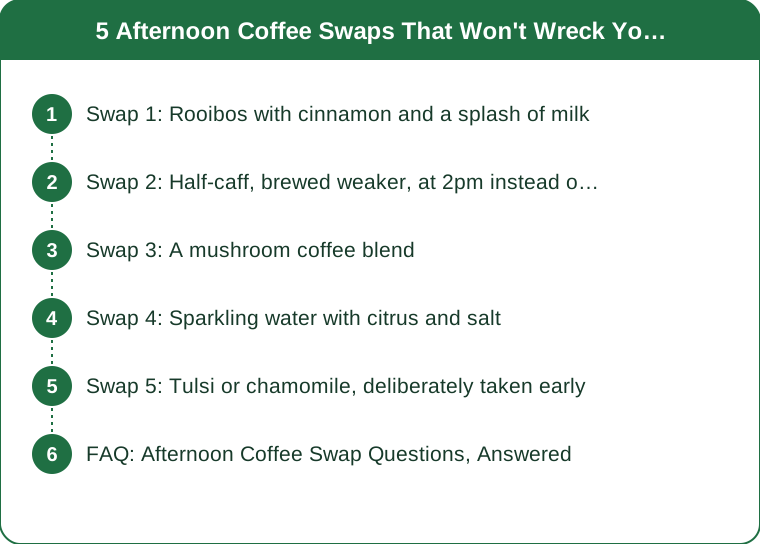
Swap 1: Rooibos with cinnamon and a splash of milk
Best for: people whose afternoon coffee is really about warmth and comfort.
Rooibos is naturally caffeine-free, has a deep reddish colour that reads as coffee-adjacent, and takes milk well without going bitter. Steep it hard - five to seven minutes, longer than you’d steep black tea - because a weak rooibos tastes like nothing and that’s why people dismiss it.
Add a cinnamon stick to the pot rather than ground cinnamon in the cup. The flavour is rounder and it doesn’t sludge at the bottom.
The practical detail that makes it stick: make it in the same mug you use for coffee, at the same time, in the same spot. The ritual is doing more work than the beverage is. People who switch drinks and also switch mugs and locations abandon the change roughly twice as fast, because they’ve removed the cue that made the habit automatic in the first place.
Cost note: loose-leaf rooibos is inexpensive per cup and keeps for a year, so this is the lowest-commitment experiment on the list.
Swap 2: Half-caff, brewed weaker, at 2pm instead of 4pm
Best for: people who genuinely want the caffeine and aren’t ready to give it up.
This is the least glamorous option and often the most effective, because it doesn’t ask you to change the drink at all.
Two adjustments: halve the dose and move it earlier. A half-caff at 2pm delivers roughly a quarter of the bedtime caffeine load of a full cup at 4pm, once you account for both the smaller dose and the extra two hours of clearance.
Why it works better than quitting cold: caffeine withdrawal headaches typically appear 12-24 hours after a significant reduction and can last several days, which is precisely why most abrupt attempts fail on day two. A stepped reduction sidesteps that almost entirely.
A reasonable four-week taper: week one, move the time earlier only. Week two, half-caff at the earlier time. Week three, half-caff every other day. Week four, decide whether you still want it.
Individual variation is large here - caffeine metabolism differs substantially between people, and some genuinely clear it fast enough that a late coffee doesn’t affect their sleep. If yours doesn’t, this whole list is optional.
Swap 3: A mushroom coffee blend
Best for: people who want the taste and mouthfeel of coffee with less caffeine.
Mushroom coffee blends typically mix a small amount of instant coffee with extracts of lion’s mane, chaga, or reishi. The caffeine content is usually well below a standard cup, and the taste is closer to coffee than any herbal option.
What to actually check on the label: the caffeine content per serving, which is often not listed prominently, and the extract ratio for the mushroom component. A blend that lists a vague proprietary formula without dosing tells you very little about what you’re drinking.
Be realistic about claims. Research on functional mushrooms is early and mostly small-scale, and the honest position is that the reliable benefit here is lower caffeine in a format you’ll actually drink - which is a real benefit and doesn’t need embellishment.
Skip this one if you dislike earthy flavours. Most people either take to it immediately or never do, and there’s no point forcing it when four other options exist.

Swap 4: Sparkling water with citrus and salt
Best for: the 3pm slump that is actually mild dehydration.
This is the swap people dismiss and the one with the most direct mechanism. By mid-afternoon, most people are meaningfully under-hydrated, and mild dehydration presents as fatigue and difficulty concentrating - the exact symptoms that get treated with coffee.
The recipe: 300ml sparkling water, a generous squeeze of lemon or lime, and a small pinch of salt. The salt sounds odd and matters - it makes the water more palatable and you’ll drink the whole glass rather than half.
Test it honestly for one week. Drink this first, wait fifteen minutes, then decide whether you still want coffee. A large share of people find the craving has gone. The ones for whom it hasn’t have learned something useful too.
Pair it with two minutes of standing up. The afternoon dip is partly circadian and partly postural, and the combination of fluid and movement addresses both of the likely causes before you troubleshoot the least likely one.
Swap 5: Tulsi or chamomile, deliberately taken early
Best for: people whose afternoons are stressful rather than sleepy.
If your 3pm coffee is a response to tension rather than fatigue, a stimulant is working against you. Tulsi - holy basil - and chamomile sit in the traditionally calming category and are usually taken without caffeine at all.
Take it at 3pm, not at 9pm. The common mistake is saving calming teas for bedtime, where they compete with an already wound-up nervous system. Taken mid-afternoon, they function as a deliberate pause in the part of the day where tension builds.
Give it three to four weeks if you’re using it as a routine rather than a one-off. Most traditionally used botanicals in this category are described as taking weeks of consistent use before any noticeable pattern change - anything that seems to work within a day is more likely the pause, the warmth, and the ten minutes away from a screen.
Worth saying plainly: if you’re on medication, pregnant, or breastfeeding, check herbal supplements with a pharmacist or doctor first - several common botanicals interact with prescriptions. This is general information, not medical advice.
FAQ: Afternoon Coffee Swap Questions, Answered
What’s the actual cutoff time for caffeine?
A common guideline is 8-10 hours before bed, but individual clearance varies widely. The practical test is a two-week experiment with a fixed cutoff time and notes on how you slept.
Will I get withdrawal headaches?
Only if you reduce substantially and abruptly. A stepped taper over three to four weeks avoids it for most people.
Does decaf still contain caffeine?
Yes, a small amount - typically a few milligrams per cup rather than the 80-100mg in a standard coffee. For most people that’s low enough not to matter at 3pm.
Which of the five should I start with?
The sparkling water one, for a week, before anything else. It’s free, it tests the most likely cause, and it tells you whether you’re solving a hydration problem or a caffeine one.
TL;DR:
- Caffeine’s 5-6 hour half-life means a 3pm coffee is still working at bedtime
- Match the swap to what you actually want: warmth, ritual, alertness, or a break
- Test hydration first - the 3pm slump is frequently a water problem
- Taper rather than quit; withdrawal headaches are what end most abrupt attempts
- Keep the same mug, same time, same spot - the ritual is half the habit
You’re not really replacing a coffee. You’re replacing the ten minutes the coffee bought you, and that part is non-negotiable.
Keep Reading
This article is for general informational purposes only and is not medical advice. Always consult a qualified health professional for guidance specific to you.