5 Food Pairings That Change How Well Your Adaptogens Absorb
Quick Answer: Fat-soluble compounds like curcumin and the withanolides in ashwagandha absorb substantially better with a source of dietary fat. Tannin-heavy drinks such as black tea and coffee can bind some plant compounds and reduce uptake. Timing matters as much as pairing: taking a calming adaptogen alongside caffeine gives your body two opposing signals at once.
Most people troubleshoot a disappointing adaptogen by raising the dose. Pairing is the cheaper variable, and it’s usually the one that’s wrong. Here are five combinations - four to use, one to stop.
This is general information, not medical advice. Adaptogens interact with several common medications, so check with a pharmacist or clinician before starting one.

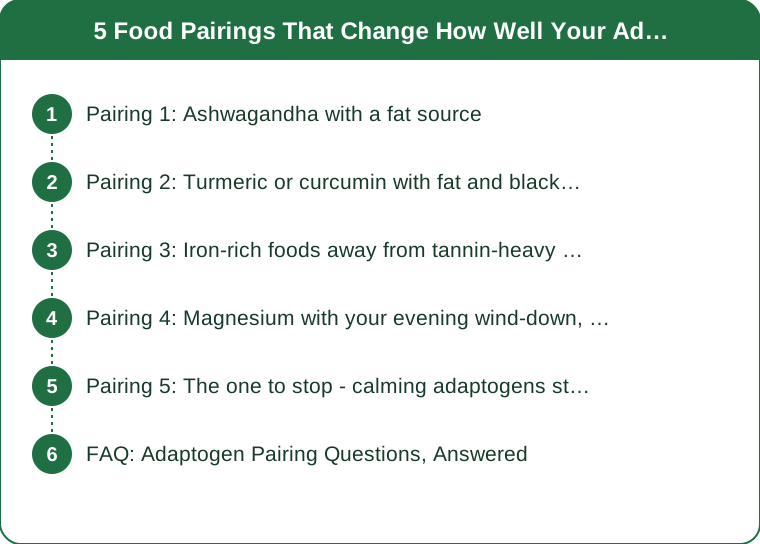
Pairing 1: Ashwagandha with a fat source
Ashwagandha’s active compounds - withanolides - are fat-soluble. Taken with water on an empty stomach, a meaningful portion of what you paid for passes through without being absorbed.
What to pair it with: whole milk, a milk alternative with real fat content, yoghurt, a spoonful of nut butter, or simply take it with a meal that contains fat. Roughly 5 to 10 grams of fat is enough - you don’t need a fatty meal, just a fat-containing one.
The traditional preparation is worth noting here: ashwagandha has been taken with warm milk for centuries, which turns out to be a reasonable delivery system rather than only a comfort ritual.
Timing note: many people find ashwagandha settles better in the evening, and evening dosing pairs naturally with dinner. If you take it in the morning on an empty stomach with water, that’s the least effective version of the habit.
Watch for: stomach upset on an empty stomach is common and is one of the main reasons people quit in week one. Food usually solves it.
Pairing 2: Turmeric or curcumin with fat and black pepper
Curcumin has famously poor bioavailability on its own - a large share is metabolised before it does anything useful.
Two multipliers, and you want both:
- Fat. Curcumin is fat-soluble. Cooking it into oil, stirring it into full-fat yoghurt, or blending it with coconut milk all work. A dry capsule with water is the weakest form.
- Piperine from black pepper. A small amount of piperine substantially slows curcumin’s breakdown in the liver. A pinch is enough - roughly 1/20th of a teaspoon alongside a normal turmeric dose.
This is why golden milk recipes reliably include both a fat and a crack of pepper. It isn’t flavour tradition alone.
A caution worth stating: piperine increases the absorption of many things, including certain medications. If you take prescription medication, the piperine part of this pairing is specifically worth raising with a pharmacist.
Pairing 3: Iron-rich foods away from tannin-heavy drinks
This one is less about the adaptogen and more about what you lose alongside it.
Many people take their morning stack with coffee or strong black tea. Both are high in tannins, which bind non-heme iron and can meaningfully reduce absorption from the same meal. If your stack sits next to a spinach-and-bean breakfast or an iron supplement, the coffee is quietly working against it.
The practical fix: leave roughly 60 minutes between iron-containing food or supplements and tannin-heavy drinks. You don’t have to give up either - just separate them.
Where this bites hardest: women with heavy periods, plant-based eaters, and endurance athletes all sit in higher-risk groups for low iron. If you’ve been tired despite a decent stack, this pairing is worth checking before adding anything new to the shelf.
Herbal teas - rooibos, ginger, peppermint - don’t carry the same tannin load and are a straightforward substitute for the hour.

Pairing 4: Magnesium with your evening wind-down, not your morning coffee
Magnesium isn’t an adaptogen, but it’s in most evening stacks, and where you place it changes what you get.
Forms behave differently: citrate has a laxative effect at higher doses, glycinate is generally the gentlest for sleep-focused use, and oxide is poorly absorbed relative to its label dose. Taking magnesium in the morning with coffee is doubly unhelpful - caffeine has a mild diuretic effect, and you’re spending a calming input at the moment you’re trying to be alert.
Better placement: with the evening meal or 60-90 minutes before bed, alongside a small amount of food. Splitting the dose across two smaller servings improves comfort and absorption compared to one large one.
Pair it with: a protein-containing evening snack if you take it late. An empty stomach makes GI side effects more likely, and those side effects are the reason most people abandon magnesium before finding out whether it helped.
Pairing 5: The one to stop - calming adaptogens stacked with caffeine
This is the pairing that quietly wastes the most money.
Taking ashwagandha, L-theanine at low doses, or a calming mushroom blend in the same cup as a strong coffee gives your nervous system two contradictory instructions. You’re not getting a smoothed-out version of both - you’re mostly getting the caffeine, plus a supplement whose effect you can no longer detect.
Two exceptions worth knowing:
- L-theanine with caffeine is genuinely well-supported as a combination - roughly 100-200mg theanine to 80-100mg caffeine tends to reduce jitter without removing alertness. This one is a real pairing, not a clash.
- Rhodiola is stimulating rather than calming, so morning placement alongside a moderate coffee is coherent. It’s a poor evening choice for the same reason.
The general rule: put stimulating adaptogens in the morning half of the day and calming ones in the evening half, and stop asking a single cup to do both jobs. If you can’t tell whether something is working, the most likely reason is that you’re taking it next to something louder.
As daylight shortens through autumn, most people’s caffeine cut-off needs to move earlier, not later - which is a good moment to re-sort the whole shelf into a morning group and an evening group.
FAQ: Adaptogen Pairing Questions, Answered
How long before I can tell whether a pairing change helped?
Give it two to three weeks with everything else held constant. Adaptogens generally work on a timescale of weeks, not doses, so changing two things at once makes the result unreadable.
Can I take everything in one drink?
You can, but you lose the ability to diagnose anything. If a stack of five isn’t working, splitting it into a morning group and an evening group is the fastest way to find out which piece was carrying it.
Does taking adaptogens with protein powder affect absorption?
A protein shake with some fat content is a perfectly good vehicle for fat-soluble compounds. Water-only shakes are a weaker one - add nut butter or use a milk base.
Is there anything I shouldn’t pair with grapefruit?
Grapefruit affects a liver enzyme that processes many compounds and medications, and the interactions can be significant. Keep grapefruit separate from supplements and medications unless you’ve specifically checked.
TL;DR:
- Ashwagandha and curcumin are fat-soluble - take them with 5-10g of fat, not water alone
- Add a pinch of black pepper to turmeric; check piperine with a pharmacist if you take medication
- Keep coffee and strong black tea about an hour away from iron-rich meals and supplements
- Magnesium belongs in the evening, split, with food
- Stop stacking calming adaptogens with caffeine - L-theanine is the one real exception
None of these changes cost anything. Before you increase a dose or add a sixth jar to the shelf, spend two weeks fixing what each one is sitting next to.
Keep Reading
This article is for general informational purposes only and is not medical advice. Always consult a qualified health professional for guidance specific to you.